Introduction
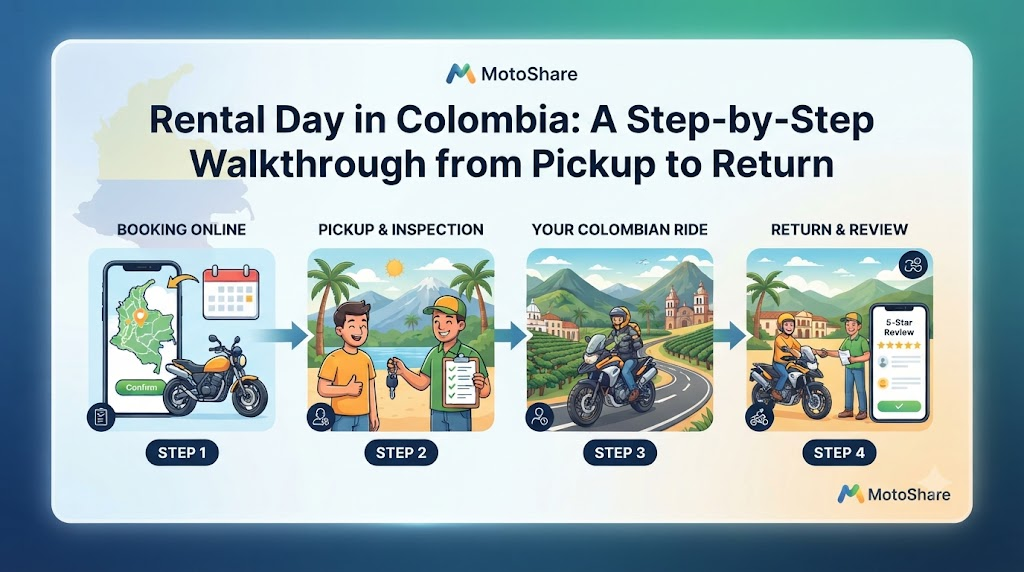
Most rental advice stops once you press the booking button. But a lot can still go right or wrong after that. The handover, the paperwork, the first ten minutes on the road, and the return all shape how your trip feels. A careful rental day can save you stress, money, and arguments later.
If you are exploring motorcycle rental Colombia options, this guide walks you through the whole experience in order. It follows one rental from the first search to the day you hand the keys back. It also shows where MotoShare fits, since it is a marketplace made for finding and comparing vehicles in Colombia.
What MotoShare Is and How It Helps
MotoShare is an online marketplace for renting vehicles in Colombia. It connects renters with local providers and lists motorcycles, scooters, and cars. It is made for international tourists, local travellers, commuters, backpackers, adventure riders, and anyone who wants flexible transport.
A marketplace helps with the early stages of a rental:
- Searching: See what is listed for your city and dates.
- Comparing: Look at vehicle types, prices, and provider terms side by side.
- Confirming: Book only when you understand the conditions.
Everything after that happens between you and the provider, so it pays to know what to expect. Not every vehicle is offered in every city, and terms differ from one provider to another. Always check your own dates and place.
Who Needs What
People rent for different reasons, and that changes what a good rental day looks like.
- A tourist may want a motorcycle to explore a destination.
- A commuter may need steady transport for a few weeks of work.
- A visitor may find a scooter ideal for short trips in one area.
- A family may need a car with room for people and bags.
- An experienced rider may want a bike suited to a long journey.
The best choice depends on the journey, budget, experience, comfort, and local rules. Whatever you choose, the rental-day steps below apply.
Picking the Right Machine
Choosing well before the handover makes everything easier. Know the bike types first.
- Commuter motorcycles are light and simple. They suit city streets and short rides.
- Scooters have a step-through frame and easy controls. They suit short, flat trips.
- Sports bikes are fast but can be tiring on long or bumpy rides.
- Premium motorcycles often add comfort and features, usually at a higher price.
- Touring bikes carry riders and bags comfortably over long distances.
- Adventure motorcycles are tall and strong, made for mixed roads.
A bigger bike is not automatically better. A heavy machine can feel clumsy if you are not used to it. Pick something you can control, because you will be handling it in an unfamiliar place.
Choosing Where to Collect It
Pickup places matter more than people expect, and each city is different.
Medellín sits in a valley with steep hills around it. If you are comparing motorcycle rental Medellin listings, check how far the pickup point is from your lodging and whether you will start your ride on a busy road.
Bogotá is large and high in the mountains, with heavy traffic and cool, changeable weather. Anyone looking at motorcycle rental Bogota should think about how easy the pickup place is to reach and how they will get out of the city centre.
Cartagena is hot and close to the sea. If you are weighing motorcycle rental Cartagena options, think about heat, sun, and whether the pickup and return points suit short rides around the old town.
In every city, compare the same points:
- Whether a vehicle is available for your dates
- The pickup and return locations
- The full price, including deposits and extras
- The provider’s rules
Never assume a certain bike is available in a certain city. Check the listing first.
Stage Three: Scooter or Motorcycle at the Counter
By the handover, you should already know which type suits you, but it helps to double-check.
A scooter is small and light. It is easy at low speeds, but it has less luggage space and can feel unsteady on rough or steep ground. A motorcycle is usually steadier at speed, carries more, and handles long days better.
A simple test helps. Picture your hardest riding day. If it is a few short, flat trips, a scooter may be enough. If it includes hills, highway stretches, or a heavy bag, a motorcycle is the wiser pick. For anyone looking at scooter rental Colombia options, be honest about your skill, and ask for a few minutes to get used to the controls before leaving.
Stage Four: Reading the Agreement Before You Sign
The rental agreement is the most important piece of paper in the whole process. Read it, and ask about anything that is unclear. Look closely at:
- Rental length and total price: Make sure they match what you booked.
- Security deposit and extra charges: Ask how much is held, how, and when it returns.
- Insurance: Learn what it covers and what it leaves out.
- Distance and fuel: Some rentals limit how far you can go or set fuel rules.
- Cancellation and changes: Know what happens if plans shift.
- Pickup and return: Confirm places and times.
- Licence, age, and documents: Check that yours meet the provider’s rules.
Terms can differ between providers, vehicles, cities, and rental periods. If a provider changes something from the listing, ask for it in writing.
The Handover Check
This is the step many travellers skip, and it is one of the most useful. Walk around the vehicle with the provider before you leave. Take clear photos or a short video of the vehicle, including any scratches, dents, or marks that are already there.
| What to check | What to look for |
|---|---|
| Tyres | Pressure, cuts, and wear |
| Brakes | Firm feel on both front and back |
| Lights and signals | Headlight, brake light, and indicators all work |
| Mirrors and controls | Mirrors adjust, and the throttle and clutch move smoothly |
| Fuel level | Note it, and ask how it should be at return |
| Existing damage | Photograph it and make sure it is written down |
| Helmet | Check it fits well and has no cracks |
| Papers | Ask to see the vehicle’s documents and insurance |
If something does not look right, say so before you leave. It is much easier to sort out at the counter than after an incident.
Getting Ready for Rough or Remote Roads
If your plans include harder roads, think carefully before you go. For adventure motorcycle rental Colombia travellers should match the bike to the road, the trip length, the luggage, the weather, and their own experience.
Then prepare the practical side:
- Protective gear: A good helmet comes first. Add gloves, a sturdy jacket, and strong shoes.
- Navigation: Download maps before you leave, since signal can disappear.
- Fuel: Fill up when you can. Some roads have long gaps between stations.
- Rest: Stop often. Tired riders make poor decisions.
- Emergency plan: Save the provider’s number and know where the next town is.
Unfamiliar areas can surprise you, so careful planning matters more the further you go.
Setting Out on a Longer Journey
A motorcycle road trip Colombia plan works best when you answer a few honest questions:
- How far can I comfortably ride each day?
- How much time do I really have?
- What will the weather do along the way?
- What are the roads like?
- Where will I stop for fuel, food, and sleep?
Different roads call for different care. Mountain roads bring sharp curves and sudden fog. City streets bring heavy traffic and busy crossings. Country roads may have holes, animals, or loose gravel. Plan shorter days than you think you need.
Some travellers prefer to ride with a guide. If you look at motorcycle tours Colombia providers offer, check the route, the group size, who the guide is, what is included, and what safety rules apply. Confirm current details directly, because tours and availability can change. No route is safe for every rider at every time, so be ready to change plans if conditions turn bad.
When the Rental Is a Car Instead
On some trips, a car is the better tool. It tends to win when you have several passengers, a lot of luggage, long driving days, or wet weather.
A quick way to tell car types apart:
- Hatchbacks are compact with an upward-opening rear door. They are easy to park.
- Sedans have a separate trunk and a smooth ride for a few passengers.
- SUVs sit higher and have more room, which helps with groups and rougher roads.
When you look at car rental Colombia options, compare seats, luggage space, total cost, insurance, deposits, mileage rules, and pickup arrangements. If you plan to stay in one area, car rental Medellin listings may suit day trips to the hills and small towns around the city. The same handover check applies: walk around the car, photograph existing damage, test the lights, and confirm the fuel level.
Rules to Confirm Before You Ride Away
Rules shape what you can do, so check them early. The points below are general, and requirements can change. Confirm them with the provider and with official Colombian sources.
- Driving licence: Many guides say tourists can use a valid foreign licence during their authorised stay, as long as it covers the vehicle type. Sources differ on exact time limits, so verify yours. An International Driving Permit may help if your licence is not in a familiar script.
- Insurance: Colombia requires basic accident cover called SOAT. It belongs to the vehicle, not the driver. Guides commonly note that it does not cover damage to a rented vehicle or theft, so ask what other cover applies.
- Age: Providers often set a minimum age. For cars it is commonly around 21, but it varies.
- Vehicle papers: Ask to see that the documents and insurance are in order, and carry copies with you.
- City restrictions: Some cities limit when vehicles may drive based on the plate number. Ask how this affects your dates.
- Alcohol: Colombia has firm rules on drinking and driving. Avoiding alcohol completely is the safest choice.
Never assume the rules are the same for every traveller or vehicle.
Handing It Back
A good return protects your deposit. Plan to arrive a little early, because rushed returns lead to missed details.
- Return on time and at the agreed place. Late returns and different drop-off points may cost extra.
- Match the fuel level the agreement asks for.
- Walk around the vehicle with the provider, and compare it with your handover photos.
- Get a written note that the vehicle came back in good condition.
- Ask when the deposit will be released, and keep your receipt until it is.
If anything is disputed, your photos and paperwork become your best evidence.
Why Preparation Pays Off
Careful preparation turns a stressful rental into an easy one. Check the weather, pick a vehicle that fits your skills, read the full terms, keep your documents together, and leave extra time on the first and last days. Colombian roads are often slower than they look on a map, and hurrying is rarely a good idea.
A Five-Step Way to Plan
These are general steps and not a description of any one booking system.
- Choose your destination, dates, and vehicle type. A clear plan keeps your search focused.
- Compare listings, rental periods, and total prices. The lowest daily rate may not be the lowest overall cost.
- Read the provider’s terms. Insurance, deposits, and cancellation rules decide how much risk you carry.
- Check licence rules, documents, safety needs, and pickup details. A missing paper can stop a rental.
- Review everything before you confirm. A last look can catch a costly surprise.
Common Rental-Day Mistakes
- Skipping the handover photos. Without proof, you may be blamed for old damage. Take photos before you leave.
- Choosing a bike that is too hard to handle. Pick one that matches your experience.
- Judging only by the daily rate. Add deposits, fuel, and fees for the full picture.
- Overlooking insurance gaps and deposit rules. Read what is not covered.
- Assuming a vehicle is free on your dates. Verify the exact dates you selected.
- Ignoring the cancellation policy. Know the rules before you pay.
- Forgetting return details. Confirm the place, time, and fuel rule in writing.
A Hypothetical Example: A Three-Day Coastal Trip
This story is made up to show how a traveller might think. It is not a real customer and does not describe a MotoShare user.
Andrés is visiting from another Latin American country with his cousin Valeria. They plan three days on the Caribbean coast. Andrés has ridden scooters but never a large motorcycle. Valeria does not ride.
First, they compare a motorcycle with a car. A motorcycle would be fun for Andrés, but Valeria would be a passenger with a bag. A car would carry them both comfortably, and the weather is hot, so air conditioning would be welcome. They check the route and the forecast, which shows possible afternoon rain. They then read each provider’s terms, including deposit, insurance exclusions, fuel rule, and cancellation policy. They also check that Andrés’s licence meets the requirements.
They choose a small car. At pickup, they walk around it with the provider, photograph two small scratches, test the lights, and note the fuel level. They confirm the return time in writing. On the last day, they refuel, return early, compare the car with their photos, and get a note confirming its condition.
Frequently Asked Questions
How do I compare motorcycle-rental options in Colombia?
Line up the vehicle type, total price, deposit, insurance, pickup place, and provider rules for the same dates.
What should I check before riding away on a rented motorcycle?
Walk around it with the provider, photograph existing damage, and check the tyres, brakes, lights, and helmet. Confirm your licence and paperwork too.
How do I choose between a scooter and a motorcycle?
Think about your route, luggage, and experience. Scooters suit short, flat trips, while motorcycles suit hills and longer rides.
What should I know before renting a car?
Look at seats, luggage room, insurance, deposits, mileage limits, and the provider’s minimum age.
What matters on a longer motorcycle journey?
Weather, fuel stops, rest breaks, protective gear, and a route you have already checked.
Which documents should I check?
Your driving licence, passport, rental agreement, and the vehicle papers and insurance. Rules can change, so confirm them first.
What should I do if there is a problem during the rental?
Contact the provider using the number you saved, stay safe, and keep notes and photos. Check your agreement for what to do in an accident or breakdown.
Conclusion
A good rental does not end at the booking screen. It continues through the handover, the ride, and the return. Read the agreement, check the vehicle with the provider, take photos, know the rules, and finish with a clear written return. MotoShare can be a helpful place to start comparing motorcycles, scooters, and cars from local providers in Colombia. A little care on rental day can make the whole trip run smoothly.