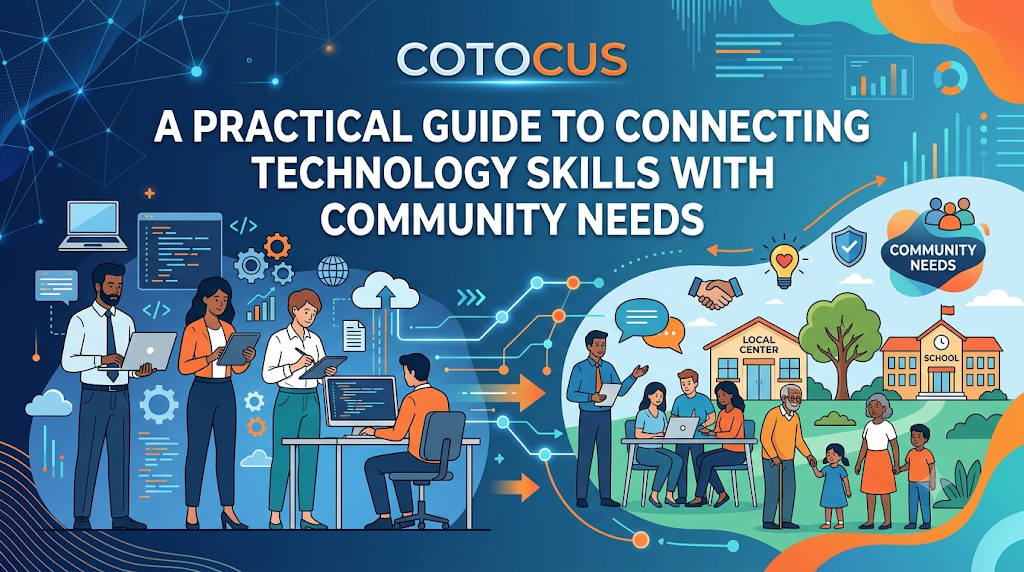
Technology holds the extraordinary power to either isolate communities or bring them closer together. While commercial software markets race toward rapid automation, an equally vital movement focuses on ensuring that digital advancements do not leave vulnerable populations behind. Cotocus Foundation stands at the forefront of this mission as a dedicated nonprofit organization harnessing technology, education, and research to generate lasting social good. By focusing on digital inclusion, ethical innovation, and skill-building, the Foundation creates pathways for equitable participation. This article examines the core pillars and initiatives of Cotocus Foundation while exploring broader educational concepts surrounding responsible artificial intelligence, digital literacy, and community-driven development.
What Is Cotocus Foundation?
Cotocus Foundation is an independent nonprofit organization centered on using technology, research, and education to create positive social impact. Unlike commercial software companies or tech startups, the Foundation operates with a mission rooted in digital inclusion, ethical research, and community empowerment.
The organization’s vision centers on making innovation and education accessible to diverse populations, helping communities navigate the digital age safely and effectively. By focusing on research and practical learning initiatives, Cotocus Foundation serves as a bridge between emerging technology fields and grassroots community needs.
At the core of its organizational framework is the role of a Technology Nonprofit Organization, which means its primary objectives are educational, social, and developmental rather than commercial or profit-driven.
Understanding the Five Pillars of Cotocus Foundation
Cotocus Foundation organizes its core work, initiatives, and community engagement around five distinct pillars. Each pillar addresses a specific dimension of social impact, technology access, and human development.
Technology for Humanity
The first pillar centers on ensuring that technological tools serve human needs, improve quality of life, and address real-world challenges. This involves promoting digital access, supporting human-centered design principles, and ensuring that underserved populations are not left behind as digital systems evolve.
Innovation and Research
Innovation without research often leads to unintended consequences. This pillar emphasizes evidence-based approaches, systematic experimentation, and thoughtful investigation into how emerging technologies interact with society, economies, and communities.
Education and Skills
Empowering individuals requires continuous learning and practical skill development. This pillar focuses on digital literacy, technical training, and lifelong learning frameworks that equip students, professionals, and community members with the knowledge needed to thrive in modern environments.
Healthcare and Digital Wellbeing
Technology profoundly influences health, mental wellbeing, and access to medical information. This pillar explores digital health awareness, healthcare technology accessibility, and strategies to support wellbeing in increasingly digital environments.
Community and Sustainability
Sustainable development requires active community participation. This pillar supports local empowerment, rural technology access, environmental responsibility, and inclusive growth strategies that respect local contexts and long-term community resilience.
What Are Digital Literacy Programs?
Digital literacy goes beyond knowing how to operate a smartphone or computer; it encompasses the ability to find, evaluate, utilize, and create information safely and effectively using digital technologies. In an interconnected world, a lack of fundamental digital skills can limit access to employment, education, essential services, and civic participation.
Effective Digital Literacy Programs focus on building practical competencies, fostering internet awareness, teaching digital safety, and instilling confidence in everyday technology use. These programs are especially crucial for underserved communities, older adults, and students in resource-constrained environments.
Cotocus Foundation approaches this need through initiatives such as the Digital Literacy for All program, which aims to demystify technology and provide foundational learning opportunities for individuals seeking to build practical digital capabilities.
How Digital Inclusion Programs Help Reduce the Digital Divide
The digital divide refers to the gap between demographics and regions that have access to modern information and communications technology and those that have restricted or no access. This divide is shaped not only by physical infrastructure—such as reliable internet connectivity and modern devices—but also by socioeconomic factors and digital confidence.
Comprehensive Digital Inclusion Programs address these multidimensional barriers by combining hardware access with connectivity solutions, mentorship, and ongoing technical support. Inclusive technology initiatives strive to ensure that every individual, regardless of geography or economic background, can participate meaningfully in the digital economy.
Cotocus Foundation incorporates digital inclusion principles across its community-focused initiatives, working to understand local connectivity challenges and support accessible pathways to technology adoption.
AI for Social Impact
Artificial intelligence offers powerful capabilities for analyzing complex data, automating repetitive tasks, and identifying patterns that can inform decision-making in healthcare, education, and environmental sustainability. However, applying artificial intelligence effectively requires aligning technical capabilities with genuine human needs.
The practice of AI for Social Impact involves deploying machine learning and data science methodologies to solve pressing social challenges. This can include supporting educational equity, improving healthcare accessibility, optimizing resource distribution, and addressing environmental sustainability concerns.
Cotocus Foundation facilitates collaborative exploration in this space through initiatives like the AI for Social Impact Fellowship. This fellowship brings together technologists, researchers, and social innovators to examine how artificial intelligence can be applied responsibly and effectively to address real-world community challenges.
Why Responsible AI Research Matters
As artificial intelligence systems become more integrated into daily life, questions regarding ethics, fairness, transparency, and accountability become paramount. Unchecked algorithms can perpetuate historical biases, reduce transparency in decision-making, and raise valid privacy concerns.
Engaging in Responsible AI Research involves rigorous investigation into algorithmic fairness, data privacy, human oversight, and the societal implications of automated systems. It emphasizes the importance of building systems that are transparent, accountable, and respectful of diverse human values.
Cotocus Foundation’s research focus includes examining AI ethics and responsible technology practices. Within its publications and research agenda, topics such as responsible implementation frameworks and ethical considerations are explored to guide developers, researchers, and community leaders toward safer technological deployment.
Technology Education Programs for Lifelong Learning
Education is the foundation of individual empowerment and community resilience. In a rapidly evolving technological environment, traditional educational models must adapt to include continuous learning, technical adaptability, and critical thinking skills.
Robust Technology Education Programs provide learners of all ages with structured pathways to understand modern computing, data concepts, digital safety, and specialized technical domains. These programs emphasize mentorship, career preparation, and practical problem-solving over rote memorization.
Cotocus Foundation designs its educational initiatives to support lifelong learning, helping individuals build the technical fluency required to navigate modern career landscapes and engage confidently with digital tools.
Youth Innovation Programs and Young Problem Solvers
Empowering the next generation of thinkers, creators, and problem solvers is essential for long-term societal progress. Young minds often bring fresh perspectives and creative approaches to persistent challenges.
Through targeted Youth Innovation Programs, students and young participants receive opportunities to explore technology, collaborate on team projects, develop critical thinking skills, and receive guidance from experienced mentors. These programs encourage young individuals to view technology not merely as a consumer product, but as a medium for creation and positive social change.
Cotocus Foundation supports this vision through initiatives like the Youth Innovation Challenge, which encourages young problem solvers to design technology-driven solutions for community-level issues.
Nonprofit Digital Transformation
Many mission-driven organizations, charities, and community groups operate with limited resources while striving to maximize their social impact. Adopting modern digital tools can significantly enhance their operational efficiency, data management, outreach, and service delivery.
The process of Nonprofit Digital Transformation involves thoughtfully integrating digital technologies, cloud solutions, and data management systems into an organization’s daily workflows. Successful transformation requires balancing technological adoption with organizational capacity, staff training, and data privacy safeguards.
Cotocus Foundation addresses this organizational need through its specialized lab environments and advisory frameworks, supporting nonprofits and educational institutions as they navigate responsible digital adoption.
| Cotocus Foundation Focus Area | Main Purpose | Related Social Impact |
| Technology for Humanity | Ensuring tech serves human needs and ethical standards | Enhancing digital access and human-centered design |
| Innovation & Research | Conducting evidence-based investigation into emerging tech | Informing ethical practices and societal readiness |
| Education & Skills | Providing digital literacy and technical training | Empowering individuals with lifelong learning tools |
| Healthcare & Digital Wellbeing | Exploring health tech accessibility and digital balance | Supporting health awareness and wellness in tech use |
| Community & Sustainability | Fostering local participation and inclusive growth | Building long-term resilience and rural tech access |
Innovation Labs and Technology Research
Cotocus Foundation structures a portion of its investigative and developmental work through dedicated innovation labs. Each lab focuses on distinct technological intersections and societal needs.
AI Innovation Lab
The AI Innovation Lab serves as a collaborative environment for exploring artificial intelligence models, ethical deployment strategies, and practical applications designed to support social good and community problem-solving.
Future Technology Lab
The Future Technology Lab examines emerging trends in computing, automation, and digital infrastructure, helping researchers and community stakeholders anticipate upcoming technological shifts and their societal implications.
Digital Transformation Lab
The Digital Transformation Lab focuses on assisting mission-driven organizations, nonprofits, and educational institutions in adopting digital tools, optimizing workflows, and enhancing their technological capacity responsibly.
Technology and Healthcare for Social Impact
Technology plays a vital role in expanding healthcare access, disseminating health education, and supporting patient empowerment. In many underserved regions, physical distance from medical facilities and a lack of health literacy present significant barriers to wellbeing.
Integrating technology into healthcare for social impact involves exploring telehealth solutions, digital health awareness campaigns, and accessible health information systems. Cotocus Foundation’s Healthcare & Digital Wellbeing pillar addresses these intersections, promoting initiatives that bridge the gap between healthcare resources and communities in need.
Community and Sustainability Initiatives
Technology projects designed for social impact must be deeply rooted in the communities they aim to serve. Top-down implementations often fail because they do not account for local contexts, cultural nuances, or environmental sustainability.
Cotocus Foundation emphasizes community participation, rural technology access, and environmental responsibility within its sustainability initiatives. By involving local stakeholders in the design and deployment of technology projects, the Foundation promotes inclusive growth and long-term ecological balance.
Corporate Social Impact Partnerships
Achieving meaningful scale in technology-for-good initiatives requires collaboration across sectors. Organizations, corporations, and academic institutions can contribute significantly by sharing technical expertise, research resources, mentorship, and programmatic support.
Through structured Corporate Social Impact Partnerships, entities can align their social responsibility goals with impactful educational, research, and digital inclusion programs. Cotocus Foundation collaborates with partners who share a commitment to ethical technology, education, and community development.
Technology Volunteer Opportunities
Active community participation is vital for the success of nonprofit initiatives. Professionals, researchers, educators, and students can contribute their time, knowledge, and skills to support digital inclusion and educational programs.
Engaging in Technology Volunteer Opportunities allows individuals to mentor learners, assist with research projects, contribute educational content, or participate in community outreach initiatives. Cotocus Foundation facilitates these contributions through structures such as the Global Volunteer Network, the Campus Ambassador Program, and collaborative Innovation Circles.
Who Can Benefit From Cotocus Foundation’s Work?
Students and Young Learners
Young learners can access educational resources, digital literacy programs, and innovation challenges designed to foster technical fluency and creative problem-solving skills.
Technology Professionals
Tech professionals can engage in volunteering, research collaborations, and mentorship programs, applying their expertise toward meaningful social impact initiatives.
Researchers and Academics
Academics and researchers can collaborate on responsible technology studies, AI ethics investigations, and evidence-based publications exploring the societal impacts of digital tools.
Nonprofit and Community Organizations
Mission-driven organizations can benefit from digital transformation guidance, capacity-building resources, and collaborative frameworks designed to enhance their community outreach.
Social Entrepreneurs and Innovators
Innovators working on social challenges can find a supportive community, fellowship opportunities, and collaborative spaces focused on human-centered technology.
Organizations Interested in Technology for Social Impact
Entities seeking to align their corporate social responsibility or philanthropic efforts with ethical technology and education can explore strategic partnership opportunities.
How to Plan a Technology-for-Social-Impact Initiative
Designing an effective technology initiative for social good requires careful planning, empathy, and structured execution.
Step 1: Identify the Community Need
Begin by listening to the community to understand the actual challenges they face, rather than assuming what technology is needed.
Step 2: Understand the People Affected
Analyze the demographics, existing skill levels, infrastructure constraints, and cultural contexts of the target population.
Step 3: Define the Social-Impact Goal
Establish clear, measurable objectives focused on the social or educational outcomes you intend to achieve.
Step 4: Select the Appropriate Technology
Choose tools and platforms that are sustainable, cost-effective, accessible, and appropriate for the local environment.
Step 5: Consider Ethics and Inclusion
Evaluate potential privacy risks, algorithmic biases, accessibility barriers, and unintended consequences before deployment.
Step 6: Build Community Participation
Involve local stakeholders directly in the design, testing, and implementation phases to ensure local ownership and relevance.
Step 7: Measure Meaningful Outcomes
Track qualitative and quantitative indicators related to learning, skill adoption, and community capacity rather than just software deployment metrics.
Step 8: Review, Improve, and Sustain the Initiative
Continuously gather feedback, refine the program based on real-world usage, and establish plans for long-term sustainability.
| Technology for Social Impact Area | Key Challenge | Possible Approach |
| Digital Literacy | Lack of foundational computer or internet skills | Conduct structured community workshops with guided mentorship |
| Digital Inclusion | Inadequate device access and connectivity barriers | Combine hardware provisioning with local connectivity hubs |
| Responsible AI | Algorithmic bias and lack of transparency in automated tools | Implement rigorous ethical reviews and human oversight frameworks |
| Technology Education | Outdated curricula that do not match modern skill needs | Integrate project-based learning and critical thinking modules |
| Youth Innovation | Limited opportunities for young problem solvers | Organize collaborative challenges with experienced mentors |
| Healthcare Technology | Distance from facilities and low health literacy | Deploy accessible telehealth awareness and digital health guides |
| Nonprofit Transformation | Limited organizational capacity and digital tool adoption | Provide tailored guidance, training, and workflow optimization |
Common Challenges in Technology-for-Social-Impact Work
Deploying technology for social good frequently encounters operational and systemic hurdles. Recognizing these challenges helps organizations design more resilient programs:
- Digital Access Barriers: Inconsistent electricity, expensive data, and lack of hardware can halt programs immediately.
- Skill Gaps: Introducing advanced tools without foundational digital literacy creates frustration rather than empowerment.
- Affordability: Sustaining technology infrastructure over the long term requires careful financial planning and community support.
- Privacy and Security: Collecting data in vulnerable communities demands strict adherence to ethical data stewardship.
- AI Bias: Automated systems trained on unrepresentative data can reinforce existing social inequalities.
- Community Adoption: Solutions imposed without local input often face resistance or low utilization rates.
- Organizational Capacity: Nonprofits often lack the dedicated technical staff required to maintain complex digital systems.
- Sustainability: Short-term funding cycles can disrupt long-term educational and community programs.
- Measuring Outcomes: Quantifying qualitative social changes, such as increased confidence or empowerment, requires nuanced evaluation frameworks.
Best Practices for Ethical Technology Initiatives
To maximize positive impact and minimize harm, organizations working at the intersection of technology and society should adhere to proven best practices:
- Prioritize community listening over preconceived technical solutions.
- Design every digital tool with accessibility and universal design principles in mind.
- Keep ethics, privacy, and fairness at the center of all research and development.
- Establish transparent data practices and respect user confidentiality.
- Foster local leadership and community ownership of initiatives.
- Combine hardware and software distribution with comprehensive digital skills training.
- Focus on long-term sustainability rather than temporary tech interventions.
- Encourage cross-sector collaboration between technologists, educators, and community leaders.
- Continuously evaluate program outcomes through open feedback loops and qualitative reviews.
- Share learnings and research transparently to help the broader social-impact sector grow.
Measuring Social Impact in Technology Programs
Evaluating the success of technology-focused nonprofit programs requires moving beyond vanity metrics like website traffic or app downloads. Meaningful evaluation focuses on real human outcomes.
Key indicators often include participation rates, demonstrated skill acquisition, long-term digital confidence, community capacity building, and qualitative feedback from beneficiaries. Transparency in reporting allows organizations to learn from both successes and setbacks, ensuring continuous improvement and accountability to the communities they serve.
Frequently Asked Questions
1. What is Cotocus Foundation?
Cotocus Foundation is an independent nonprofit organization focused on utilizing technology, research, education, and community engagement to drive digital inclusion and social impact.
2. What does a technology nonprofit organization do?
A technology nonprofit organization applies technical expertise, educational resources, and research to address social challenges, bridge digital divides, and support underserved communities rather than pursuing commercial software sales.
3. What are digital literacy programs?
Digital literacy programs are educational initiatives designed to teach individuals how to use computers, the internet, and digital tools safely, effectively, and with confidence.
4. How can AI support social impact?
AI can support social impact by helping analyze complex datasets to improve educational equity, optimize resource distribution, enhance healthcare access, and address environmental challenges.
5. Why is responsible AI research important?
Responsible AI research is crucial to identify and mitigate algorithmic biases, protect data privacy, ensure transparency, and maintain human oversight in automated systems.
6. What does digital inclusion mean?
Digital inclusion refers to ensuring that all individuals and communities, including the most disadvantaged, have access to information and communication technologies, affordable connectivity, and the skills to use them.
7. What types of technology education programs can support communities?
Programs that offer digital literacy training, technical skill-building, critical thinking workshops, and lifelong learning mentorship help communities adapt to modern technological environments.
8. How can young people participate in innovation programs?
Young people can participate through youth innovation challenges, mentorship programs, and collaborative technology projects that encourage creative problem-solving.
9. What is nonprofit digital transformation?
Nonprofit digital transformation is the thoughtful integration of digital tools, data systems, and cloud technology into a mission-driven organization’s operations to enhance efficiency and impact.
10. How can professionals explore technology volunteer opportunities?
Professionals can contribute their expertise by joining global volunteer networks, mentoring learners, supporting research initiatives, or participating in community-focused innovation circles.
Conclusion
Building a truly inclusive digital future requires a deliberate balance between technological innovation and human empathy. Throughout this article, we have explored how Cotocus Foundation approaches this challenge through its five core pillars, spanning digital literacy, healthcare awareness, responsible research, and community sustainability. When technology is designed with accessibility and ethics at its heart, it stops being an exclusive privilege and becomes a universal tool for empowerment. By supporting education, fostering youth innovation, and encouraging collaborative volunteering, we can help bridge the digital divide. Sustained progress relies on our collective commitment to ensuring that the benefits of the digital age are shared fairly across every segment of society.