Introduction
Cryptocurrency markets move fast. Prices can rise or fall by twenty percent in a single day. When people enter this space, they often face a major fork in the road: Should they buy and hold crypto for the future, or should they trade actively to make quick gains?
Many beginners jump into trading because they see exciting stories online. However, without a clear plan, they often lose money due to emotional decisions and hidden costs. Choosing the right path requires understanding how both strategies work, what risks they carry, and which one fits your personality and schedule. This article breaks down long-term investing and crypto trading in simple terms so you can make an informed choice.
What Is Long-Term Crypto Investing?
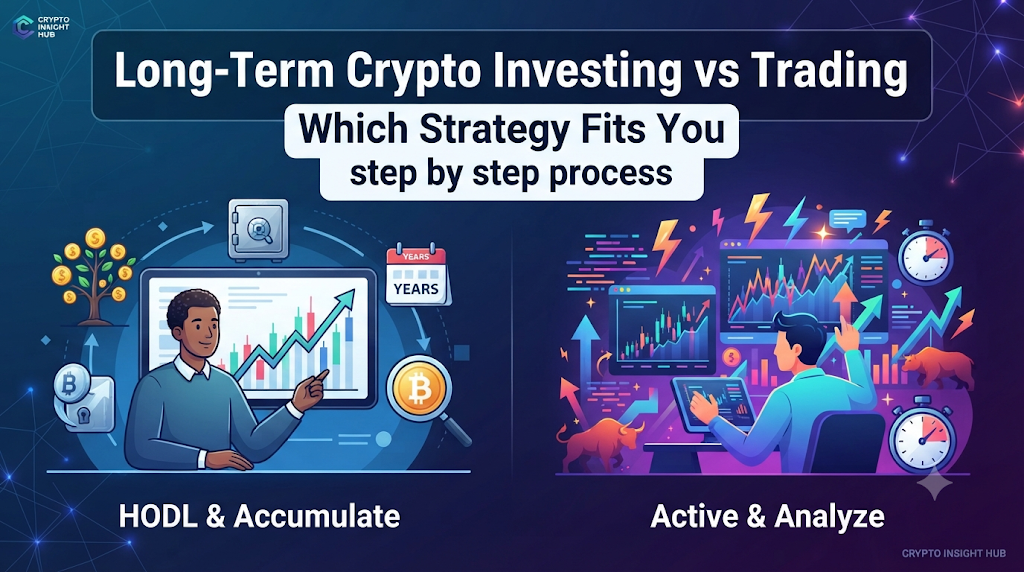
Long-term crypto investing is a strategy where you purchase digital assets—such as Bitcoin or Ethereum—and hold them for several months, years, or even decades. Investors believe in the long-term utility, adoption, and technology behind the assets they choose.
Why Does It Matter?
Markets are emotional in the short term, but they tend to reflect fundamental value over the long term. Investing helps you look past daily market noise and focus on overall network growth.
How Does It Work?
Investors usually practice a method called Dollar-Cost Averaging (DCA). Instead of putting all their money in at once, they invest a fixed amount every week or month, regardless of whether the market is up or down. This lowers the impact of volatility.
What Is Crypto Trading?
Crypto trading involves buying and selling digital assets frequently. Traders look to profit from small price changes over hours, days, or weeks. They often use technical charts, indicators, and market news to time their entries and exits.
Why Does It Matter?
Trading offers the potential for faster returns because you do not have to wait years for an asset to grow. However, it requires significant time, emotional control, and analytical skill.
How Does It Work?
Traders look at charts to spot trends or patterns. They use technical analysis—the study of past price charts and trading volume to predict future price direction. They also rely heavily on risk management tools, such as stop-loss orders, which automatically sell an asset if its price drops below a certain level to limit losses.
Key Differences: Investing vs Trading
| Feature | Long-Term Investing | Crypto Trading |
| Time Horizon | Years or decades | Minutes, hours, or days |
| Time Commitment | Low (check occasionally) | High (hours of daily chart monitoring) |
| Primary Focus | Fundamental value and adoption | Short-term price momentum and charts |
| Stress Level | Generally lower | High, due to constant volatility |
| Tax Implications | Often taxed at lower capital gains rates | Frequently taxed at higher short-term rates |
Risks and Limitations
Every financial strategy comes with downsides. Understanding what can go wrong helps protect your capital.
Risks of Long-Term Investing
- Project Failure: If the blockchain project you invest in loses its utility or gets replaced by better technology, its value can drop to zero.
- Extended Bear Markets: You might watch your portfolio lose fifty percent or more of its value and have to wait years for a recovery.
Risks of Crypto Trading
- High Stress and Burnout: Watching charts all day can drain your mental energy and lead to poor decision-making.
- Exchange Fees: Frequent buying and selling racks up trading fees that eat into your profits.
- Loss of Capital: Most active retail traders lose money because they trade against sophisticated algorithms and experienced professionals.
Common Mistakes Beginners Make
- FOMO Buying: Buying an asset simply because its price is surging rapidly on social media, usually right before a market correction.
- Overleveraging: Using borrowed money (margin or leverage) to amplify trades, which can wipe out an entire account in seconds.
- Trading Without a Plan: Entering trades based on gut feeling rather than a structured entry and exit strategy.
Decision-Making Framework: Which One Is Right for You?
To decide between investing and trading, ask yourself these questions:
- How much free time do you have? If you work a full-time job and cannot monitor markets, long-term investing is much more practical.
- What is your risk tolerance? If market crashes cause you severe anxiety, active trading will likely damage your peace of mind.
- Do you enjoy research and data? Trading requires learning technical analysis and financial tracking. Investing focuses more on research, fundamentals, and patience.
Key Terms
- Volatility: The speed and size of price changes in an asset over a short period.
- Dollar-Cost Averaging (DCA): Investing a fixed amount of money at regular intervals, regardless of market price.
- Technical Analysis: Studying price charts and market data to predict future price movements.
- Stop-Loss Order: An instruction given to an exchange to automatically sell an asset when it reaches a specific lower price.
- Fundamental Analysis: Evaluating an asset based on its underlying technology, team, utility, and adoption rate.
- Bear Market: A prolonged market condition where asset prices fall significantly and overall sentiment is negative.
- Bull Market: A market period characterized by rising prices and widespread investor optimism.
- Liquidity: How easily an asset can be bought or sold in the market without causing drastic price changes.
FAQs
Can I do both investing and trading at the same time?
Yes. Many participants keep a “core” portfolio of long-term holdings while setting aside a small, separate amount of risk capital for active trading.
Do I need a large amount of money to start investing?
No. Most reputable platforms allow you to start investing with very small amounts, making long-term strategies accessible to almost anyone.
Is trading safer if I use stablecoins?
Stablecoins reduce price volatility, but they do not eliminate exchange risk, regulatory risk, or smart contract vulnerabilities.
Which strategy is better for tax purposes?
In many regions, long-term investments held for over a year qualify for lower capital gains tax rates compared to frequent short-term trades. Always check local tax laws.
How do I store my long-term crypto safely?
Long-term investors often move their assets off exchanges and into hardware wallets—offline physical devices that protect private keys from online hacks.
Conclusion
Long-term crypto investing and crypto trading serve entirely different goals. Investing is about patience, research, and believing in the future of digital assets. Trading is about agility, timing, and managing short-term market waves.
Evaluate your personal schedule, risk tolerance, and financial goals before choosing a path. For most beginners, a patient, long-term approach combined with continuous learning offers a safer and more sustainable entry into the crypto ecosystem.