Introduction
Getting started with cryptocurrency often brings an unpleasant surprise: sending a small amount of money or swapping tokens can sometimes cost several dollars—or even more—in extra fees. These extra charges are called gas fees.
For beginners, gas fees can feel confusing, frustrating, and entirely random. Why does it cost money just to move funds? Why do these prices change from minute to minute? Without understanding how these costs work, users often lose money by making transactions during peak hours or setting incorrect settings in their digital wallets.
This guide breaks down Ethereum gas fees using plain language, real-world examples, and practical steps to keep your costs under control.
What Are Ethereum Gas Fees?
To understand gas fees, it helps to look at how Ethereum operates. Ethereum is not just a digital currency; it is a global, decentralized computer. Anyone can run code, trade digital items, or borrow money using smart contracts on this network.
However, computer power is limited. Every calculation, transfer, and piece of data processed requires physical energy from computers (validators) securing the network.
- The Professional Term: Gas is the pricing unit used to measure the computational effort required to execute operations on the Ethereum network.
- Simple Meaning: Gas is the fuel fee you pay to run instructions on Ethereum.
- Why It Matters: Without gas fees, people could spam the network with endless useless tasks, crashing the entire system. Fees ensure that only meaningful transactions get processed.
- Example: Just like a car needs gasoline to drive down the highway, an Ethereum transaction needs “gas” to travel from your wallet to a smart contract.
How Ethereum Gas Works: Gwei, Base Fee, and Priority Fee
Understanding gas requires looking at how fees are measured and calculated. Ethereum transactions use a tiny fraction of a token called Ether (ETH), measured in smaller units called Gwei. One Gwei equals one-billionth of an ETH.
Following an important upgrade known as the London Upgrade, Ethereum introduced a structured fee system consisting of two main parts:
1. The Base Fee
Every block on the blockchain has a required minimum price per unit of gas, called the Base Fee. The network automatically sets this fee based on how busy the blockchain is.
- If blocks are full, the base fee goes up.
- If blocks are empty, the base fee goes down.
- Crucial rule: The base fee is burned (permanently destroyed) and removed from circulation.
2. The Priority Fee (Tip)
To encourage validators to process your transaction faster, you can add a small tip called the Priority Fee.
- During busy times, adding a higher tip moves your transaction to the front of the line.
- During quiet times, a standard or low tip is usually enough.
The total cost you pay is calculated using this simple formula:
$$\text{Total Fee} = \text{Gas Units Used} \times (\text{Base Fee} + \text{Priority Fee})$$
Why Do Gas Fees Change So Much?
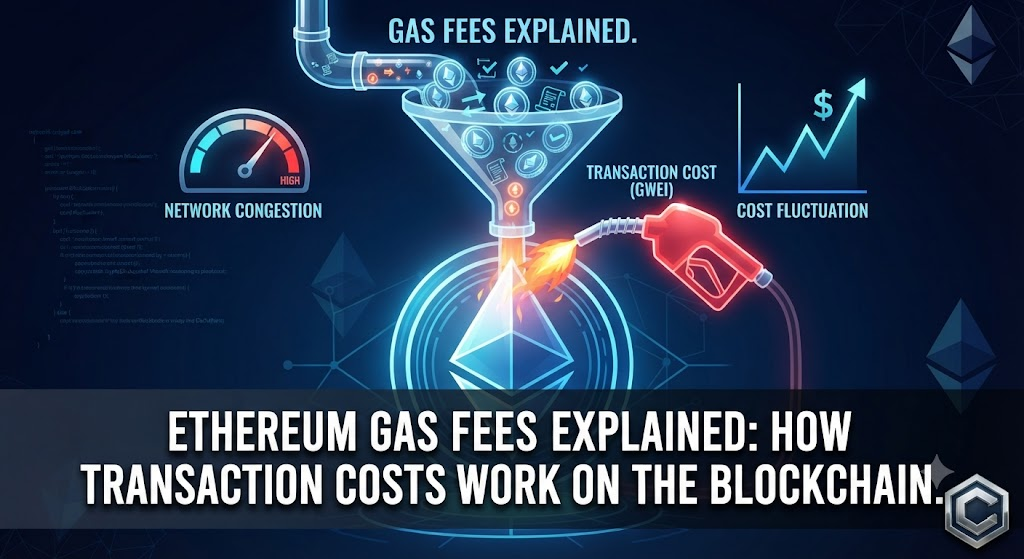
One day, a simple token transfer might cost fifty cents. A few hours later, the exact same transfer might cost fifteen dollars. This fluctuation happens due to supply and demand.
The Highway Analogy
Imagine a highway with four lanes.
- On a quiet Tuesday morning, very few cars are driving. Traffic moves smoothly, and the toll is cheap.
- On a Friday evening before a long holiday weekend, thousands of drivers crowd the road. Traffic slows to a crawl.
Ethereum works the same way. When a popular digital collectible (NFT) drops or a major market event happens, thousands of people rush to send transactions at the exact same time. Because block space is limited, wallets enter a bidding war, driving the base fee higher as users compete for space in the next block.
Practical Examples of Gas Costs
Different actions require different amounts of computational work. Because of this, gas consumption varies widely depending on what you do:
- Simple ETH Transfer: Sending basic ETH from your wallet to a friend’s wallet requires very little math. It uses standard gas units (usually around 21,000 gas).
- Interacting with Smart Contracts: Swapping tokens on a decentralized exchange or depositing money into a lending platform requires complex code execution. This requires significantly more gas units, making the fee higher.
| Transaction Type | Relative Complexity | Typical Gas Impact |
| Simple ETH Transfer | Low | Minimal |
| Token Swap (DEX) | Medium | Moderate |
| Minting an NFT | High | High |
| Complex Smart Contract Interaction | Very High | Very High |
Common Mistakes Beginners Make
Navigating transaction fees without experience often leads to costly mistakes.
- Submitting Transactions During Peak Hours:
- What people do: Transact whenever it is convenient for them without checking network congestion.
- Why it causes problems: They end up paying peak prices during high-traffic hours.
- What to do instead: Check gas trackers (like Etherscan’s Gas Tracker) to find lower-traffic windows, often late at night or over weekends.
- Setting Gas Limits Too Low:
- What people do: Manually lower the gas limit in their wallet to save money.
- Why it causes problems: If the transaction runs out of gas before finishing, the network cancels it, but still keeps the fee for the work done.
- What to do instead: Let modern wallets estimate the correct gas limit automatically.
- Falling for Front-Running Bots:
- What people do: Leave slippage tolerances too wide on decentralized exchanges during high volatility.
- Why it causes problems: Automated trading bots (“sandwich bots”) spot the pending transaction and manipulate the price around it.
- What to do instead: Set tight slippage limits and avoid trading during extreme market chaos.
Risks and Limitations of High Gas Fees
High gas fees create major hurdles for everyday users and the broader crypto ecosystem:
- Priced-Out Users: When a simple transaction costs twenty dollars, regular users cannot afford to use decentralized apps, pushing activity toward wealthier participants.
- Stuck Transactions: If you set a priority fee that is too low during a sudden market surge, your transaction can get stuck pending in the memory pool (mempool) for hours or days.
- Failed Transactions: Running out of gas wastes funds without completing the desired action.
How to Save Money on Ethereum Gas Fees
Smart strategies can significantly reduce how much you spend on transaction costs:
- Time Your Transactions: Gas prices fluctuate throughout the day and week. Weekends and late evenings (UTC time) often see lower network activity and cheaper fees.
- Use Layer 2 Networks: Many transactions now occur on “Layer 2” scaling networks (such as Arbitrum, Optimism, or Base). These networks bundle hundreds of transactions together, settle them on Ethereum, and drop user fees by 90% or more.
- Set Gas Alerts: Use tracking tools to notify you when average gas prices drop below a specific threshold before you execute non-urgent trades.
- Be Patient: If a transaction is not urgent, set a lower base fee and let it process during a quiet network window.
Checklist for Managing Gas Fees
Before confirming any transaction, review this quick verification list:
- Have I checked current network gas prices using a reliable tracker?
- Is this transaction time-sensitive, or can I wait for lower fees?
- Am I using a Layer 2 network if lower fees are available for this app?
- Is my wallet configured with recommended default gas settings rather than manual guesswork?
- Do I have enough extra ETH left in my wallet to cover the fee after the transfer?
Key Terms
- Base Fee: The minimum network fee required to include a transaction in a block, which gets permanently burned.
- Gwei: A small denomination of Ether used to price gas fees easily.
- Mempool: The waiting room where pending transactions sit before validators add them to a block.
- Priority Fee: An optional tip paid directly to validators to speed up transaction processing.
- Gas Limit: The maximum amount of computational work you are willing to let a transaction consume.
- Layer 2: Separate blockchains built on top of Ethereum designed to process transactions faster and cheaper.
- Validator: A network participant that verifies transactions and secures the blockchain.
- Smart Contract: Self-executing code stored on the blockchain that runs automatically when conditions are met.
FAQs
What happens if my Ethereum transaction runs out of gas?
If a transaction runs out of gas, the network stops executing the code, cancels the operation, and refunds any unused gas. However, the network keeps the fee for the computational work already performed.
Can I get a refund for a high gas fee?
No. Once the Ethereum network validates and processes a transaction, the fee is permanent and non-refundable, regardless of whether the underlying smart contract action succeeded or failed.
Why are gas fees paid in ETH instead of other tokens?
ETH is the native currency of the Ethereum network. Requiring fees to be paid in ETH ensures that validators are compensated in the core asset securing the entire economic system.
Do gas fees go to Ethereum’s creators?
No. Base fees are burned (destroyed), and priority fees go directly to the validators (and stakers) who secure the network and process blocks.
Are gas fees the same on every wallet?
Most modern wallets automatically estimate the correct gas fees based on live network conditions, but advanced wallets let you manually adjust your priority fees up or down.
What is a gas tracker?
A gas tracker is a live dashboard (such as Etherscan’s Gas Tracker) that displays current low, average, and high gas prices in real-time to help users choose the best time to transact.
How can I avoid high gas fees completely?
While you cannot avoid fees entirely on the main Ethereum network, you can use Layer 2 scaling networks or alternative blockchains that feature significantly lower transaction costs.
Conclusion
Ethereum gas fees are an essential mechanism that keeps the blockchain secure, functional, and protected from spam. While high fees during busy market periods can be frustrating, understanding how base fees, priority fees, and network congestion work gives you control over your costs. By timing your transactions wisely, utilizing Layer 2 networks, and verifying your wallet settings, you can navigate the Ethereum ecosystem efficiently without overpaying.