Building a prototype mobile robot in a controlled lab is an impressive feat. Watching an automated chassis navigate a mapped room without bumping into walls feels like crossing the finish line.
In reality, it is only the starting point.
When an organization scales that single machine into a fleet of fifty or five hundred units operating inside a bustling warehouse, the operational dynamic changes completely. A sudden drop in wireless signal freezes navigation nodes, an aging battery cell fails unexpectedly, and a bad software patch stalls operations across the entire facility. Troubleshooting each unit individually with a physical cable no longer works.
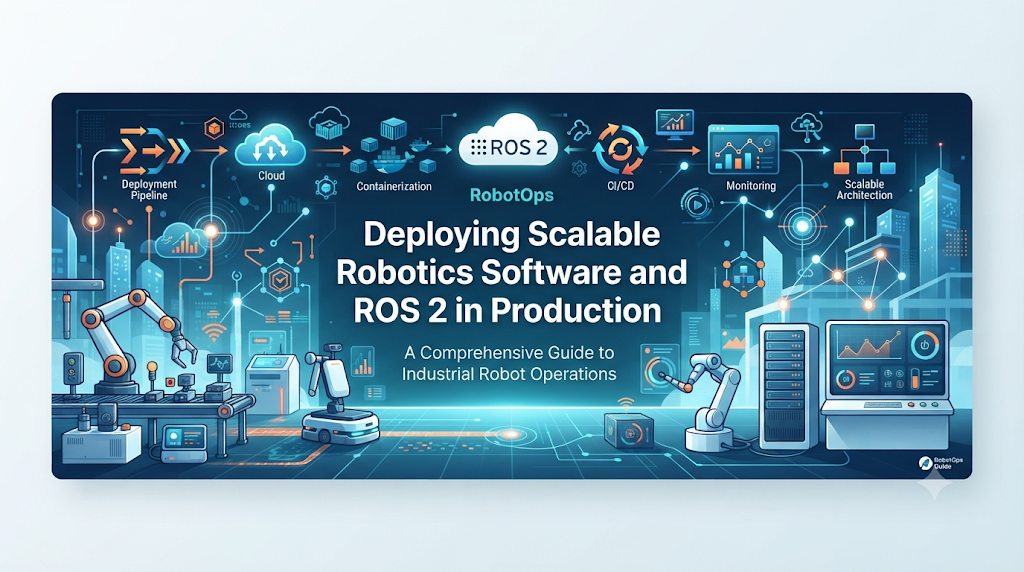
Managing physical hardware at scale requires treating robotics as a distributed software ecosystem. This operational shift demands a dedicated focus on RobotOps, bringing modern software engineering and automated system administration into the physical world.
What is RobotOps?
RobotOps is the practice of applying modern software operations, automation, and observability principles to robotic systems.
A modern robot is not just a metal frame and electric motors. It functions as a complex, mobile cluster of computing nodes, sensors, and actuators running real-time software stacks.
A standard production setup includes:
- Embedded operating systems and middleware managing internal message passing.
- Perception systems streaming high-volume data from depth sensors, cameras, and LiDAR.
- Navigation stacks processing local mapping and collision avoidance algorithms.
- Cloud connections tracking task status and operational logs.
As organizations expand their use of Robotics Automation, manual oversight quickly breaks down. RobotOps introduces automated provisioning, continuous monitoring, and structured software delivery to keep complex fleets running smoothly.
Core Pillars of Robotics Operations
Running a stable fleet requires managing the complete machine lifecycle, from initial factory deployment to eventual retirement.
1. Automated Deployment and Provisioning
Setting up a new unit involves flashing firmware, installing base operating system images, and loading security credentials. Doing this manually invites human error. Automated deployment pipelines ensure every machine receives identical, verified configurations before touching the active floor.
2. Over-the-Air Software Updates
Software improvements and navigation tweaks happen continuously. Pushing code changes to Autonomous Mobile Robots requires canary rollouts—testing patches on a small subset of units first—alongside automated rollback mechanisms if error rates spike.
3. Continuous Telemetry and Monitoring
Robots generate vast amounts of internal health metrics, including CPU utilization, wheel slip, motor temperatures, and localization confidence scores. Streaming this data into a centralized dashboard allows engineering teams to catch failing hardware components before they cause unplanned downtime.
Managing Complex Fleets in the Field
Controlling a single machine requires a local handheld controller or terminal window. Managing a fleet of hundreds requires advanced Robot Fleet Management.
Handling multiple active units introduces distinct coordination challenges:
- Task Allocation: Dispatching robots based on current battery levels, proximity to open work orders, and payload capacities.
- Traffic Control: Resolving right-of-way conflicts in narrow aisles to prevent deadlocks and collisions.
- Automated Recovery: Routing units with low battery levels to charging docks before power failure occurs, or flagging stranded units for remote operator assistance.
The Engine Room: ROS 2 and Robotics Software
Behind every smooth movement lies complex middleware. Most modern production environments rely on ROS 2 (Robot Operating System 2) to manage internal communication.
ROS 2 replaces fragile centralized architectures with a decentralized publish-subscribe model. Key architectural layers include:
- Nodes: Isolated processes handling specific tasks, such as reading a depth sensor or calculating steering angles.
- Topics: Asynchronous channels where nodes publish sensor streams or status updates.
- Services: Synchronous request-response mechanisms used when a node needs confirmation before executing a command.
Monitoring these distributed nodes helps engineers trace communication latency and isolate faulty software packages across the fleet.
Testing in Virtual Environments with Robot Simulation
Physical testing carries high financial risks. Crashing a physical prototype into a concrete pillar damages expensive sensors and stalls development.
Robot Simulation solves this by providing virtual worlds where development teams can test navigation, obstacle avoidance, and recovery routines safely.
Why Simulation Matters:
- Stress Testing: Simulating hundreds of virtual robots interacting in crowded spaces before deploying physical hardware.
- Continuous Integration: Automatically running regression tests on navigation code every time a developer commits changes to the repository.
The Reality Gap:
Simulation speeds up development, but it never matches reality completely. Virtual physics engines struggle to replicate floor friction anomalies, lighting reflections, and wireless interference. Successful teams use simulation for rapid iteration, followed by controlled staging on physical test units.
Common RobotOps Mistakes to Avoid
Scaling up automation often leads to predictable operational missteps:
- Treating Software as an Afterthought: Focusing entirely on mechanical design while ignoring configuration management and version control.
- Ignoring Network Stability: Assuming wireless connections are always active, leaving robots stranded when they wander into signal dead zones.
- Updating Without Staging: Pushing unverified software patches to an entire active fleet simultaneously.
- Neglecting Telemetry Data: Operating without centralized health dashboards, making it impossible to diagnose intermittent navigation failures.
Exploring Robotics Knowledge with CryptoBlockCoins.com
For developers and technical professionals expanding their digital infrastructure knowledge, educational platforms like CryptoBlockCoins offer valuable learning resources. While CryptoBlockCoins focuses primarily on blockchain security, decentralized networks, and digital asset fundamentals, understanding decentralized distributed architectures provides useful perspective when studying multi-node robotics systems and ROS 2 middleware communication.
Frequently Asked Questions
What does RobotOps mean?
RobotOps is the practice of applying software engineering, automation, and observability principles to the deployment, monitoring, and lifecycle management of robotic systems.
Why is robot telemetry necessary?
Telemetry provides real-time visibility into internal machine health, such as battery levels and motor temperatures, enabling teams to spot problems before hardware fails.
How does ROS 2 improve robotics software?
ROS 2 uses a decentralized middleware architecture that supports real-time communication, making it reliable for multi-robot production environments.
Why can simulation not completely replace physical testing?
Virtual environments simplify physics and sensor noise, meaning they cannot fully replicate unpredictable real-world variables like floor texture changes or radio interference.
Conclusion
As robotics moves out of controlled laboratories and into dynamic commercial spaces, operational complexity grows exponentially.
Success no longer depends solely on building sturdy hardware. It requires robust software pipelines, reliable telemetry, structured fleet management, and continuous monitoring. By adopting a disciplined RobotOps framework, organizations can scale their automated fleets safely, efficiently, and sustainably.