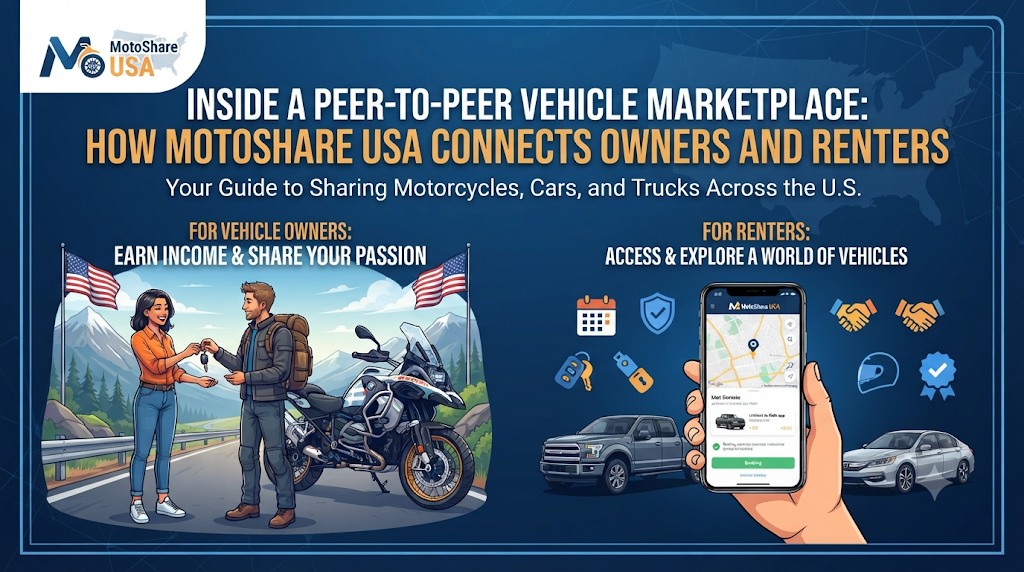
A marketplace does not make anything itself. It brings together people who have something and people who need it. For a vehicle rental marketplace, that means owners and providers on one side, and renters on the other.
The idea is easy to state, but it only works when several pieces fit together. Owners need a way to describe their vehicles. Renters need a way to find the right one. Both sides need clear terms so no one is surprised later.
MotoShare USA is built around this idea. It covers motorcycles, cars, and scooters, and it serves individual owners, rental businesses, and renters across the United States. This article treats the platform as a system. It looks at the building blocks of a vehicle marketplace, one at a time, and explains how each one shows up on MotoShare USA.
MotoShare USA in a Nutshell
MotoShare USA is an online vehicle rental marketplace. It connects people who want a motorcycle, car, or scooter for a short time with independent vehicle owners and rental service providers.
The platform is not described as a company that operates only its own fleet. Instead, it focuses on connecting renters with local owners and rental partners. Visitors can explore vehicle categories, search by location, and review the options offered by participating providers. Owners and rental businesses can list their vehicles and reach potential customers.
The platform describes itself as free to use, with no additional marketplace commissions or booking fees. That claim covers the marketplace only. It does not describe what an individual provider charges, and it does not cover taxes or other costs. Each listing still deserves a careful read.
Two clarifications matter. MotoShare USA does not own every vehicle on the platform. And not every rental is between two private individuals, because some listings come from rental businesses.
The Building Blocks of a Vehicle Marketplace
Supply: the owners and providers
Supply is the set of vehicles available to rent. On a peer-to-peer platform, it comes from many hands: individual owners, small local providers, and rental businesses.
Motorcycle owners. A rider who thinks, “I could rent out my motorcycle,” is usually looking at a bike that sits unused for part of the year. A marketplace lets that owner reach people who are already searching. The quality of the listing matters most. It should include accurate details, sensible rental periods, clear conditions, quick replies to requests, and updates whenever something changes. No platform can promise bookings, income, or steady demand. Results depend on the season, the location, the listing, and the renter’s needs.
Car owners. A driver who searches “list my car for rent” faces the same questions. Prepare accurate vehicle information. Add relevant details. State the rental conditions plainly. Review rental periods and booking requests as they come in, and keep the listing current. Do not assume anything about approval rules, payouts, or insurance. Confirm those on the platform.
Demand: renters with different needs
Demand is the set of people looking for a vehicle. Their needs vary a great deal, which is why a marketplace lists several vehicle types.
Motorcycles. Riders often start with a search for “motorcycle rentals near me.” The results show what is close. The next step is to read each owner’s details, check the rental period, and think about whether the bike fits the ride. A long highway day and a short scenic loop call for different bikes. Some renters may also need to meet requirements set by the owner or provider.
The model behind these listings is peer-to-peer motorcycle rental. Owners list their own bikes, rental service providers list bikes from their stock, and renters search, review, and arrange bookings. The usual path runs from finding a bike, to reading its details, to choosing a period, to following the booking steps on the listing.
Cars. People look for cars for everyday travel, family visits, leisure trips, weekend getaways, road trips, and short gaps when their own car is unavailable. The first search is often “car rentals near me.” The cars shown depend on what local owners and providers have listed. Check passengers, luggage, and dates.
Peer-to-peer car rental follows the same pattern. Independent owners make cars available, and renters find a listing, read it, and arrange a booking. The main difference from a traditional rental company is the source of the cars and the person who sets the terms.
Scooters. A scooter suits short distances. It is easy to park and simple to ride around a small area. Anyone looking at “scooter rentals near me” should check the scooter type, the pickup area, and the rental period, and should think about whether it suits the route. Scooters are not offered in every location, and renters may need to meet specific requirements.
Discovery: why location comes first
A vehicle is only useful where you are. That is why discovery in a rental marketplace starts with a place.
Hilton Head Island is a good example. Visitors often need transport for getting around, for holidays, and for trips to nearby areas. A search for “car rental Hilton Head Island” is a natural step for anyone planning a stay. Riders may prefer “motorcycle rental Hilton Head Island,” which brings up bikes offered nearby.
The supplied description says the platform’s island pages have shown car and motorcycle listings. Still, it helps to keep two ideas apart. The general opportunity is that a marketplace can link visitors with local owners. Confirmed inventory is a separate matter, and only the live listings can show it. Check them for your dates, and do not assume prices, vehicle models, or the number of vehicles from a general description.
Terms: what the listing actually says
Terms are the details that decide whether a rental works. They include the vehicle description, the rental period, and the conditions the owner or provider has set.
On a peer-to-peer platform, terms can differ from one listing to the next. That is a feature of the model, not a flaw. It also means the listing itself is the best source of truth. A renter who reads it closely, and an owner who writes it honestly, avoid most problems before they start.
Operations: managing the business side
Businesses that handle many vehicles need a way to stay organized. Rental management software is built for that purpose. In general, it helps a business keep track of its bookings, vehicles, and customers.
MotoShare advertises free car rental software built around three areas:
- Booking administration, for handling bookings
- Fleet operations, for managing vehicles
- Customer records, for keeping customer information
The supplied description goes no further, and neither does this article. Whether the software is available on the US platform, and how complete it is, should be confirmed before a business relies on it.
Why This Model Gets Attention
People consider peer-to-peer rentals for a few common reasons:
- Temporary needs. A rental covers a short period without buying a vehicle.
- Variety. A marketplace can show vehicles from several sources instead of one fleet.
- Local discovery. Searching by place helps renters find vehicles near where they will be.
- Flexibility. Many listings let renters choose a rental period, though the exact options depend on the provider.
- Owner participation. People with a spare vehicle, and businesses with a small fleet, can make vehicles available.
The model also has limits. Terms vary. Availability changes. A listing that looks right may be booked for your dates. A traditional rental company is not automatically better or worse, and a marketplace is not automatically cheaper. Vehicle choice, availability, terms, and suitability all depend on the individual listing and provider.
The Renter’s Route in Five Steps
- Choose the vehicle type: motorcycle, car, or scooter.
- Search by location.
- Explore the participating listings.
- Review the vehicle details, rental period, and available terms.
- Follow the booking process shown for that listing.
The exact process may vary by listing and provider.
The Owner’s Route in Five Steps
- Choose the vehicle you want to list.
- Prepare accurate information and relevant details.
- Create or submit the listing through the platform’s own process.
- Review enquiries and booking requests.
- Keep the listing and rental information updated.
Do not assume that a listing is approved automatically. The platform’s instructions come first.
A Quick Self-Check for Each Side
Most problems in vehicle rentals come from missing or outdated information. These two checklists catch the common ones.
Before you book, ask yourself:
- Have I read the full vehicle details?
- Do the rental period and location match my plan?
- Have I read the conditions?
- Is the vehicle free on my exact dates?
- Does it suit the distance, the people, and the luggage?
Before you list, ask yourself:
- Is my description complete and honest?
- Is my availability up to date?
- Have I written down the rental conditions?
- Am I ready to reply to enquiries promptly?
- Am I claiming anything about the vehicle I cannot support?
If any answer is “no,” fix it first. A few minutes of checking usually saves more time than it costs.
A Hypothetical Walkthrough
Renter: Sam, on a Monday evening.
Sam is planning a weekend trip to Hilton Head Island with a friend, and wants a car for three days. He opens the marketplace, picks “car,” and enters the island as his location. He scrolls through the listings and picks two that look suitable.
For each, he reads the vehicle details and thinks about whether it suits two people and their bags. He compares the rental period with his dates and reads the conditions the provider has stated. One car is booked for part of the weekend, so he drops it. For the other, he follows the booking process shown on the listing.
Owner: Aisha, on a Saturday morning.
Aisha owns a motorcycle she rarely rides. She decides to list it. She writes accurate details, chooses the rental periods she is comfortable with, and states her conditions clearly. After the listing goes up, she checks for enquiries and updates the page when her plans change. She does not expect a set number of bookings, since demand is never guaranteed.
Frequently Asked Questions
What kind of platform is MotoShare USA?
It is an online marketplace for renting motorcycles, cars, and scooters. It connects renters with independent owners and rental service providers.
Who owns the vehicles?
Owners and providers own them. MotoShare USA is not described as owning every listed vehicle.
Is every rental between two private individuals?
No. Some listings come from rental businesses.
How do I find a vehicle near me?
Choose a vehicle type, enter your location, and browse the listings. What you find depends on what owners and providers have listed.
Can I rely on a listing being free?
No. Availability changes, so check the listing for your exact dates.
Are there listings on Hilton Head Island?
The supplied description says the platform’s pages for the island have shown car and motorcycle listings. Check the current pages to see what is available.
What should I check before booking?
Read the vehicle details, rental period, location, and conditions. Then ask whether the vehicle suits your trip.
Will listing a vehicle bring income?
No platform can promise that. Bookings depend on demand, timing, and the quality of the listing.
Does “free to use” mean no other costs?
Not necessarily. The platform says it adds no marketplace commissions or booking fees, but providers may set their own charges, and taxes or other costs may apply.
Is there software for rental businesses?
The platform advertises free software for booking administration, fleet operations, and customer records. Confirm US availability and the full feature set before relying on it.
The Final Word
A vehicle marketplace works when its parts fit together: owners who list honestly, renters who read carefully, searches that start with a place, and terms that are clear. MotoShare USA covers motorcycles, cars, and scooters, and it serves owners, rental businesses, and renters alike. Its advertised management software is a further option for businesses, though it should be confirmed first.
For anyone using the platform, the live listing is the best guide. It shows what is actually available, on what terms, and for which dates.