Introduction & Overview
What is Proof of Work (PoW)?
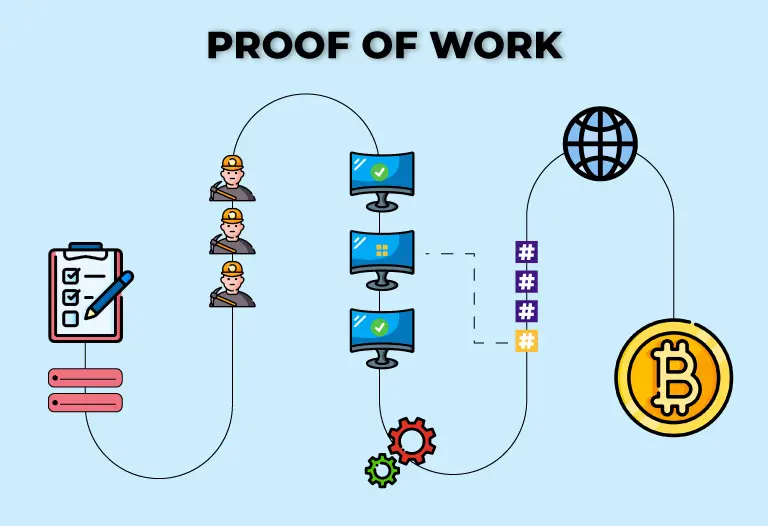
Proof of Work (PoW) is a consensus mechanism originally designed to deter denial-of-service attacks and spam. Today, it is widely used in blockchain systems like Bitcoin to ensure the integrity and immutability of distributed ledgers. In essence, PoW requires participants (nodes or miners) to solve a complex mathematical puzzle to validate transactions and add blocks to the blockchain.
History or Background
- 1993: Introduced by Cynthia Dwork and Moni Naor to prevent email spam.
- 1999: Term “Proof of Work” coined by Markus Jakobsson and Ari Juels.
- 2009: Gained prominence with Bitcoin’s launch by Satoshi Nakamoto.
- Present: Used in various blockchain-based systems and integrated into modern security frameworks.
Why is it Relevant in DevSecOps?
PoW’s relevance to DevSecOps lies in its cryptographic and security-oriented mechanisms:
- Immutable Auditing: Ensures logs or deployment data are tamper-proof.
- Decentralized Trust: Reduces single-point-of-failure risks in CI/CD systems.
- Cryptographic Verification: Useful for validating container/image authenticity.
Core Concepts & Terminology
Key Terms
| Term | Definition |
|---|---|
| Hash Function | A one-way function that produces a fixed-size output from variable input. |
| Nonce | A number used once to vary the hash output in PoW. |
| Difficulty | The target threshold for a hash to be considered valid. |
| Miner | A node that performs PoW computations. |
| Block | A data unit in a blockchain containing transaction information. |
How It Fits into the DevSecOps Lifecycle
| DevSecOps Phase | PoW Application |
|---|---|
| Plan | Evaluate blockchain-based logging systems with PoW for audit trails. |
| Develop | Use PoW libraries in secure commit or merge verification. |
| Build | Hash-based build validation using PoW for critical CI pipelines. |
| Test | Ensure reproducible hashes to validate builds are untampered. |
| Release | Include PoW hash metadata in release artifacts. |
| Deploy | PoW mechanisms for verifying deployment origin and integrity. |
| Operate/Monitor | Immutable monitoring logs via blockchain with PoW validation. |
Architecture & How It Works
Components
- Hashing Algorithm (e.g., SHA-256)
- Nonce Generator
- Difficulty Target
- Miner/Node
- Verifier
Internal Workflow
- Input Data: Transaction, build artifact, or log entry.
- Hash Computation: Repeatedly hash the input with varying nonces.
- Difficulty Check: Continue until the output hash meets the target criteria.
- Proof Submission: The successful hash is submitted.
- Verification: Any node can verify the solution in milliseconds.
Architecture Diagram (Descriptive)
[Input Data] --> [Nonce Generator] --> [SHA-256 Hasher]
                                ↓
                      [Hash Output Checker]
                                ↓
       [Meets Difficulty?] ---> [Yes] --> [Submit PoW]
                                ↓
                              [No] --> Repeat
Integration Points with CI/CD or Cloud Tools
| Tool | Integration Strategy |
|---|---|
| Jenkins | Use plugins/scripts to hash and verify build artifacts. |
| GitHub Actions | Add PoW steps in workflows for secure commit verification. |
| AWS Lambda | Event-driven PoW for log validation or serverless deployment. |
| Kubernetes | Use PoW hashes to validate container images before scheduling. |
Installation & Getting Started
Prerequisites
- Docker (optional)
- Python or Node.js environment
- Basic understanding of hashing
Hands-on: Step-by-Step Setup
Example: Python-based Simple PoW
- Install Python:
sudo apt install python3
- Simple PoW Script:
import hashlib
import time

def proof_of_work(data, difficulty):
    nonce = 0
    prefix = '0' * difficulty
    while True:
        text = f'{data}{nonce}'
        hash_result = hashlib.sha256(text.encode()).hexdigest()
        if hash_result.startswith(prefix):
            return nonce, hash_result
        nonce += 1

start_time = time.time()
nonce, hash = proof_of_work("devsecops", 4)
end_time = time.time()

print(f"Nonce: {nonce}\nHash: {hash}\nTime: {end_time - start_time}s")
- Run it:
python3 pow_demo.py
Real-World Use Cases
1. Immutable Logging Systems
- Tool: Blockchain-based log management like LogChain.
- Use: Store CI/CD logs with PoW so they can’t be modified later.
2. Tamper-Proof Artifact Registry
- Use: Secure build artifacts with PoW hashes before storing in Nexus/JFrog.
3. Supply Chain Security
- Tool: Integrate PoW into SLSA-compliant pipelines to track artifact origin.
4. Cloud Forensics
- Scenario: In a post-breach audit, PoW-backed logs provide irrefutable trails.
Benefits & Limitations
✅ Key Advantages
- Tamper-Resistance: Prevents alteration of critical data.
- Trustless Verification: Doesn’t require central authority.
- High Integrity: Strong cryptographic guarantees.
⚠️ Common Challenges
- High Energy Usage: Intensive computation can be wasteful.
- Slow Throughput: Delays in finding valid hashes.
- Not Ideal for Real-Time Use: Better suited for audit or compliance contexts.
Best Practices & Recommendations
Security
- Use strong hashing algorithms (SHA-256 or SHA-3).
- Always verify submitted PoW before trusting results.
Performance
- Adjust difficulty based on system capabilities.
- Use batch processing for offline PoW verification.
Compliance & Automation
- Align with SOC 2, ISO 27001 by ensuring immutable log evidence.
- Automate PoW hash generation as part of CI/CD pre-deploy steps.
Comparison with Alternatives
| Feature | Proof of Work (PoW) | Proof of Stake (PoS) | Digital Signatures |
|---|---|---|---|
| Energy Efficient | ❌ | ✅ | ✅ |
| Tamper Resistance | ✅ | ✅ | ✅ |
| Easy to Implement | ✅ | ❌ (requires network) | ✅ |
| Real-Time Viability | ❌ | ✅ | ✅ |
When to Choose PoW
- Audit-heavy environments
- Tamper-proof compliance logging
- Low-trust multi-party deployments
Conclusion
Final Thoughts
Proof of Work offers a novel way to infuse cryptographic integrity into DevSecOps pipelines. While it is computationally expensive, its immutability and trustless validation make it ideal for scenarios involving compliance, audit trails, and artifact verification.
Future Trends
- Shift towards hybrid models (PoW + PoS).
- Integration with zero-trust CI/CD pipelines.
- Usage in SBOM (Software Bill of Materials) tracking.
Resources & Community
Category: