1. Introduction & Overview
What is a Decentralized Exchange (DEX)?
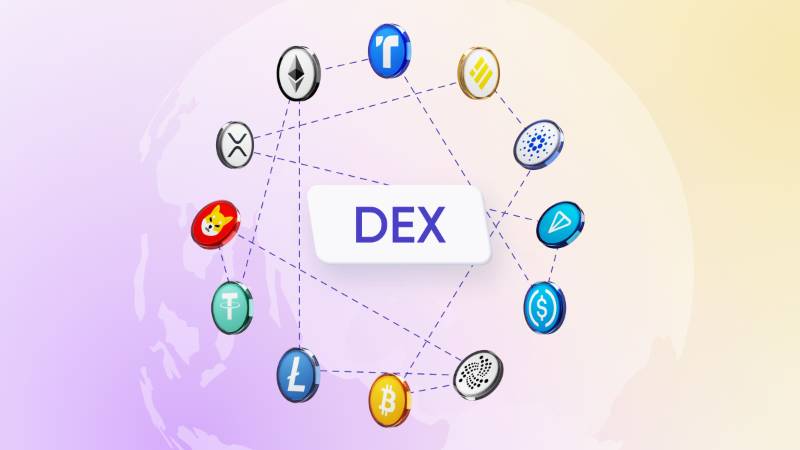
A Decentralized Exchange (DEX) is a type of cryptocurrency exchange that allows users to trade digital assets directly with one another without relying on a central authority or intermediary. DEXs operate on blockchain technology, using smart contracts to automate trading and ensure trustless transactions.
Unlike centralized exchanges (CEXs), where users deposit assets into a custodial wallet, DEXs allow traders to maintain full control of their private keys and funds.
History or Background
- 2014–2017: Early concepts like BitShares and EtherDelta emerged.
- 2018–2020: Ethereum-based DEXs such as Uniswap, Balancer, and SushiSwap gained popularity.
- 2021–2023: Explosion in DEX volumes and new protocols (Curve, PancakeSwap, dYdX) introduced advanced financial instruments.
- 2024–Present: DEXs integrate compliance and security automation, increasingly relevant for secure, decentralized DevSecOps pipelines.
Why is it Relevant in DevSecOps?
- Security-first architecture: No single point of failure, reducing attack surfaces.
- Automation via smart contracts: Integrates seamlessly with CI/CD pipelines.
- Governance & transparency: Publicly auditable contracts align with DevSecOps transparency principles.
- Secure token exchanges: Essential in Web3-based DevSecOps pipelines where tokens represent credentials, access, or microservices.
2. Core Concepts & Terminology
Key Terms and Definitions
| Term | Definition |
|---|---|
| DEX | Decentralized Exchange for peer-to-peer crypto trading |
| AMM | Automated Market Maker – pricing algorithm without order books |
| Liquidity Pool | Funds locked in a smart contract for trading pairs |
| Slippage | Price change between order submission and execution |
| Gas Fees | Transaction fees paid to miners/validators on the blockchain |
| Impermanent Loss | Temporary loss due to price volatility in liquidity provision |
| Wrapped Tokens | Tokenized representation of assets (e.g., wBTC = Wrapped Bitcoin) |
How It Fits into the DevSecOps Lifecycle
| DevSecOps Phase | Relevance of DEX |
|---|---|
| Plan | Define asset governance and decentralized identities |
| Develop | Integrate smart contracts for on-chain governance & automation |
| Build | Package tokenized tools or services for cross-chain environments |
| Test | Conduct secure testing with simulated trades and audits |
| Release | Automate token or NFT deployment using DEX liquidity |
| Deploy | Integrate with DEX oracles for real-time data |
| Operate | Monitor liquidity, price slippage, and smart contract usage |
| Secure | Audit DEX contracts, verify permissions, ensure secure token management |
3. Architecture & How It Works
Components
- Smart Contracts – Automated logic for trades, pools, and liquidity.
- Liquidity Providers – Users who add tokens to pools and earn rewards.
- AMM Algorithms – Determines price based on supply and demand (e.g.,
x * y = kin Uniswap). - Wallet Integration – MetaMask, WalletConnect used for authentication.
- Front-End Interfaces – Web UI connected via Web3.js or Ethers.js.
- Decentralized Governance – Protocol changes via DAO voting.
Internal Workflow
User → Connect Wallet → Select Pair → Confirm Swap →
→ Smart Contract Executes → Update Pool Balances → Emit Event Logs
Architecture Diagram (Textual Description)
[User Wallet] → [DEX Frontend Interface] → [Web3/Ethers.js]
→ [Smart Contract Layer (AMM, Pools)] → [Blockchain Ledger (Ethereum/BSC)]
→ [Indexers & Oracles] → [Analytics/Monitoring Tools]
Integration Points with CI/CD or Cloud Tools
- GitHub Actions/GitLab CI: Deploy smart contracts post-unit testing.
- Terraform: Provision blockchain nodes for testnets.
- Hardhat/Truffle: Used for writing and testing DEX contracts.
- Falco/OPA: Runtime policy enforcement on blockchain infra.
- SonarQube + MythX: Smart contract static analysis.
4. Installation & Getting Started
Basic Setup or Prerequisites
- Node.js ≥ v16
- MetaMask Wallet
- Ethereum testnet access (e.g., Goerli)
- Ganache or Hardhat for local blockchain
npm install -g hardhat
Hands-on: Step-by-Step Beginner-Friendly Setup
# 1. Initialize project
mkdir my-dex && cd my-dex
npm init -y
npm install --save-dev hardhat

# 2. Initialize Hardhat
npx hardhat
# Choose: "Create a basic sample project"

# 3. Add Uniswap-style contract
# Sample code (simplified)

contract SimpleDEX {
    mapping(address => uint) public balances;

    function swap() external {
        // Simplified swap logic
    }
}
- Deploy to local testnet using Hardhat.
- Connect via MetaMask using injected Web3 provider.
- Run contract functions to simulate a trade.
5. Real-World Use Cases
1. ✅ Secure Token Swapping in CI/CD
- Use DEX to exchange testnet ETH for dev tokens during testing phases.
2. ✅ Secure Credential Exchange
- Tokenize credentials (like API keys) and distribute via smart contracts with role-based access.
3. ✅ Smart Contract Supply Chain Auditing
- Use DEX logs/events for validating contract lineage in blockchain-based pipelines.
4. ✅ Industry Example: Financial Sector
- Banks experimenting with DeFi-like infrastructure simulate DEXs in private testnets for liquidity provisioning.
6. Benefits & Limitations
✅ Key Advantages
- No centralized control: Minimized attack vectors.
- Immutable and transparent: On-chain audit trails.
- Global accessibility: No KYC needed in testnets.
- Composable: Integrates well with Web3 stack.
Common Challenges or Limitations
| Limitation | Description |
|---|---|
| Gas Costs | High fees on Ethereum mainnet |
| Front-running | MEV bots may manipulate trades |
| Regulatory Uncertainty | Legal gray areas in some jurisdictions |
| Limited Performance | Not suitable for high-frequency trading |
7. Best Practices & Recommendations
🔐 Security Tips
- Conduct formal verification of smart contracts.
- Enable multi-sig governance for admin functions.
- Use secure oracles (Chainlink) for external data.
⚙️ Performance & Maintenance
- Optimize smart contract bytecode.
- Monitor liquidity pools with Prometheus + Grafana.
- Use alerting on slippage, low volume, or anomalies.
📜 Compliance & Automation
- Add audit hooks for transaction logs.
- Automate deployment using GitOps-style workflows.
- Maintain SBOMs (Software Bill of Materials) for contracts.
8. Comparison with Alternatives
| Feature | DEX (e.g., Uniswap) | CEX (e.g., Binance) | Hybrid (e.g., dYdX) |
|---|---|---|---|
| Custodial | ❌ | ✅ | Partial |
| Decentralized | ✅ | ❌ | ✅ |
| Regulatory KYC | ❌ | ✅ | ✅ |
| On-chain Transparency | ✅ | ❌ | Partial |
| DevSecOps Integration | ✅ | ❌ | ✅ |
✅ When to Choose DEX
- When compliance is programmable via smart contracts.
- When auditability and transparency are key.
- When integrating token-based workflows into DevSecOps.
9. Conclusion
Decentralized Exchanges (DEXs) are revolutionizing not just crypto trading but also how secure automation and decentralized governance are approached in DevSecOps pipelines. As the industry shifts toward Web3-native infrastructure, DEXs offer composable, auditable, and secure building blocks.
Further Reading & Communities
- Uniswap Docs: https://docs.uniswap.org/
- Balancer: https://docs.balancer.fi/
- OpenZeppelin Contracts: https://docs.openzeppelin.com/contracts/
- Web3 DevSecOps Discords: [EthSecurity, OpenDeFi, Gitcoin]