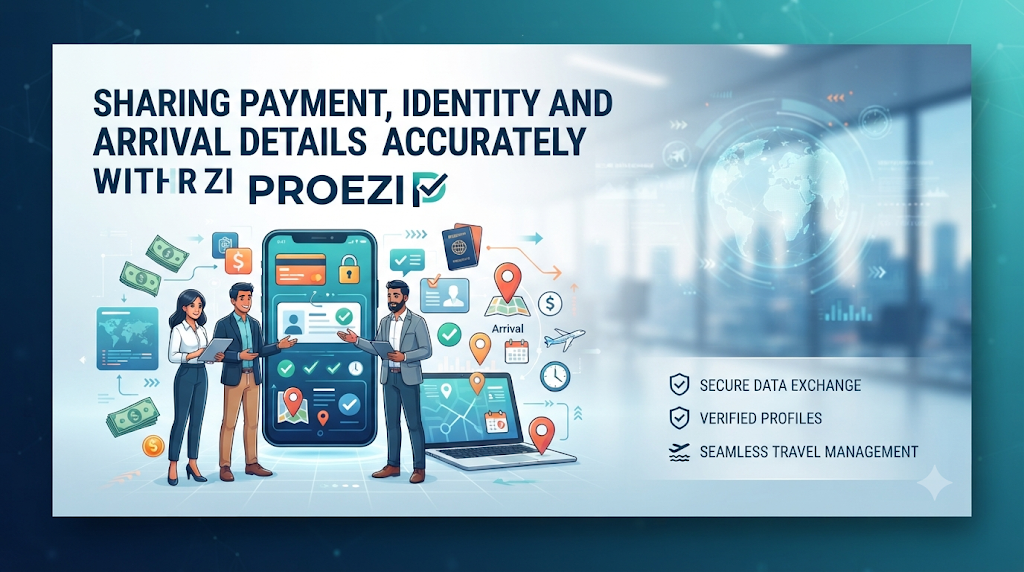
Trust between businesses is built from small pieces of information. An account number must be right. A registration number must match the company that is asking to be paid. A set of directions must lead a person to the correct door. When any one of these is wrong, the cost is not only time. Payments go astray, partners hesitate and visitors lose confidence.
Proezi is a web-based platform that helps organizations publish this kind of information on dedicated pages and share it through reusable links and QR codes. This article looks at it with accuracy in mind: what each type of page can show, what kind of checking sits behind it, and what a business must still do for itself.
Three Levels of Checking Worth Understanding
Many people use the word “verified” loosely. It helps to separate three ideas before publishing any business identifier.
- Format validation asks whether a number follows the expected structure, such as the right length and character pattern.
- Checksum validation asks whether a supported number passes the mathematical rules built into that identifier type.
- Official verification means confirming a registration or ownership directly with the government authority responsible.
Proezi applies the first two to supported identifiers. It does not carry out the third. It does not confirm who owns a company or whether a registration is active. This matters because a number that looks right can still be wrong, outdated or unrelated to the business using it. Publishing an identifier is therefore not proof that a company is legitimate.
Where Business Details Go Wrong Daily
Most errors are ordinary, not dramatic. They come from habits such as:
- Copying account details from an old message into a new one.
- Retyping a registration number from memory.
- Sending directions that were correct last quarter.
- Keeping details in many places, so no one knows which copy is current.
A dedicated page cuts these habits down. The information lives in one place, and the link or QR code that points to it stays the same. When something changes, the page is corrected once.
Payment Pages and Where They Stop
A business that needs to share bank details with customers can place them on a payment details page. The page can show bank transfer instructions, account holder names, account information, UPI details, PayPal details and supported international payment identifiers. A payment-purpose reference tells the customer what to write on the transfer, and copyable fields reduce typing mistakes. A UPI QR code payment page can also be turned into a printable sign.
The boundaries are clear and worth repeating. Proezi does not process, collect or transfer payments. It is not a bank, a wallet or a payment gateway. The customer finishes the payment in their own banking or payment application. The platform’s description lists bank, UPI, PayPal and supported international identifiers, so a business should check that its own payment method is covered before relying on it.
Sharing Company Identity with Counterparties
New vendors, partners and larger buyers often need proof that they are dealing with the right organization. A separate identity page lets a business share a registered name, a company registration identifier, a tax number and related details through one link. This is a practical way to share business registration details online without searching through old files for each request.
The page works best as a convenience. Anyone relying on it for a serious decision, such as a large contract, should still confirm the details with the official registry. A careful business can help by making its details easy to check, not by treating the page as a certificate.
Arrival Directions for Offices and Meetups
Accuracy also applies to physical locations. A street address brings people close, but offices and venues are rarely simple. Visitors need to know which entrance to use, where to park, how to pass security, where reception is and how to reach the right floor.
A good how to find us page for business answers these questions in order. Proezi supports step-by-step arrival instructions for parking areas, entrances, gates, reception desks, lifts, floors and rooms. It allows different routes for drivers, pedestrians, taxis, deliveries and visitors who need step-free access. Annotated photographs, map coordinates and entrance landmarks make each step recognizable, and an emergency contact button helps a lost visitor reach the team. Temporary notices cover short-term changes.
This is the area where visitor wayfinding software is most useful. For the outdoor journey, visitors can open Google Maps, Apple Maps or Waze. QR code directions for visitors then open the written steps from a sign, a ticket or an email. A QR code does not track a person inside a building. It simply opens the published instructions.
Short Scenarios from Technology Settings
The following examples are hypothetical and are not customer stories.
A community meetup in a rented hall. The organizer needs to guide attendees to a side entrance and tell speakers where to unload equipment. Separate routes are published for each group, and a QR code is added to the event confirmation.
A small software firm on an upper floor. Interview candidates often reach the wrong lobby. The firm publishes a page with a photograph of the correct entrance, a lift instruction and a reception note, and links to it in each interview invitation.
A consulting company with many invoices. Clients ask for account details every month. The company publishes one payment page and one company identity page, then includes both links in its invoices.
A Careful Routine Before Publishing Anything
- Collect each detail from its original source, not from an old message.
- Ask a second person to check every digit and spelling.
- Confirm identifiers against official records before sharing them.
- Decide who should receive each link.
- Test every QR code on at least two phones.
- Place the code where people will see it, at a comfortable height and in good light.
- Set a review date and update the page whenever a detail changes.
Warning Signs of Careless Information Sharing
Watch for these patterns, because they usually point to trouble.
- Payment details that differ between the invoice, the page and an email.
- A page that has not been checked since a gate, route or account changed.
- An identity page presented as if it were an official government record.
- Sensitive links posted in public places when only a few people need them.
- QR codes printed before anyone tested where they lead.
Questions Worth Asking Before You Share
Does a checksum pass confirm the company exists?
No. It only shows that the number follows its mathematical rules. Official verification is a separate step.
Can a page show several payment methods?
Yes. A payment page can hold bank transfer details, UPI information, PayPal details and supported international identifiers together.
Who actually completes the payment?
The customer does, in their own banking or payment application. The page only displays the details.
Can visitors arrive without installing anything?
Yes. Visitors open the shared page in a normal browser, with no app to install and no account to create.
Should every page be shared publicly?
Not necessarily. Customer-created pages are kept out of search indexing, but anyone with a link can open a page, so share sensitive pages only with the people who need them.
How soon should old details be removed?
As soon as they stop being correct. Out-of-date payment or access information can cause more harm than having no page at all.
Closing Thoughts on Trust and Clarity
Good business communication is rarely about grand gestures. It rests on details that are right when someone needs them, whether that is an account to pay, a number to check or a gate to find. Proezi gives organizations a tidy way to keep those details in one place, and it is honest about its limits: it displays payment information without moving money, and it checks identifier formats without vouching for a company. A business that treats each page as something to maintain, confirms its facts against original sources and shares sensitive links with care will find that trust grows from small, consistent acts of accuracy.