Introduction
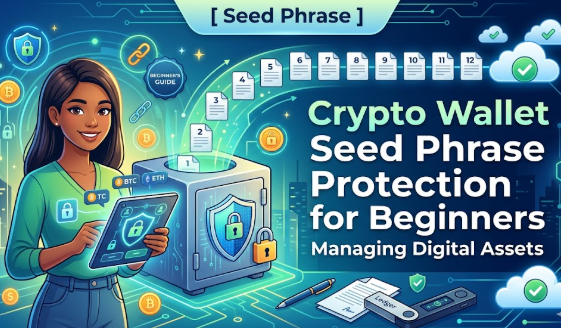
Crypto looks exciting, but beginners can lose access to their digital assets when they do not understand wallet security properly. A seed phrase may look like a simple list of words, but in a self-custody crypto wallet, it can become the main recovery key for the wallet. Many new users focus on buying coins, checking prices, or following market updates, but they ignore the basic safety rule: whoever controls the seed phrase may control the wallet. This blog explains What Is Seed Phrase in Crypto Wallets in simple words, why it matters, how it works, where beginners make mistakes, and how to store it more safely. It is useful for crypto learners, new investors, salaried people, students, small business owners, finance bloggers, and anyone trying to understand wallet security before taking risky action.
What Is Seed Phrase in Crypto Wallets
A seed phrase is a group of simple words generated by a crypto wallet when a user creates a self-custody wallet. It is also called a recovery phrase, wallet recovery phrase, or secret recovery phrase. The main purpose of the seed phrase is to help users restore access to their crypto wallet if their phone, laptop, hardware wallet, or wallet app becomes unavailable.
In simple language, a seed phrase is like a master recovery key. It is not the same as a normal password. A password may unlock an app, but a seed phrase can restore the wallet on another compatible wallet application. This is why it must be protected more carefully than a regular login password.
For example, suppose a beginner creates a crypto wallet and receives twelve words during setup. If the phone is lost, those words may help the user recover the wallet on another device. However, if another person gets those words, that person may also restore the wallet and move the crypto assets. This is the main reason private key safety and seed phrase backup are so important.
A common misunderstanding is that a seed phrase is only needed once during wallet setup. In reality, it may be needed later during recovery. The practical takeaway is simple: write it down carefully, store it offline, never share it, and never enter it on unknown websites or apps.
Why What Is Seed Phrase in Crypto Wallets Is Important
Seed phrases are important because crypto ownership works differently from normal bank accounts. With a bank, users may reset passwords through customer support, identity verification, or account recovery processes. With a self-custody crypto wallet, the user often has direct responsibility for recovery access. This gives freedom, but it also creates serious responsibility.
A seed phrase affects real-life financial decisions because crypto can involve savings, investing, trading, tax reporting, and long-term asset planning. If a beginner treats the seed phrase casually, the risk is not just technical; it can become financial. Losing the phrase may mean losing wallet access. Sharing the phrase may lead to theft. Saving it in unsafe places may expose it to hacking, phishing, or accidental deletion.
For salaried people, crypto learners, and small investors, the seed phrase is part of risk awareness. A person may invest carefully, choose assets thoughtfully, and track transactions properly, but one careless screenshot of the seed phrase can create a major security problem. Emotional decision-making also plays a role. During panic, fake support agents may ask users to “verify” a seed phrase. A careful user should know that a genuine support process should not require the seed phrase.
A practical scenario is simple. A beginner buys crypto and moves it into a self-custody wallet. Later, the wallet app is deleted by mistake. If the seed phrase was written and stored safely offline, recovery may be possible. If it was saved only in a phone gallery that was lost, the user may face serious difficulty.
The Real Problem Readers Face With Seed Phrases
The real problem is not only that beginners do not know what a seed phrase means. The bigger problem is that crypto security advice online can be confusing, incomplete, or dangerous. Some people say “not your keys, not your coins,” while others promote wallets without explaining responsibility. Beginners may hear strong opinions but still not understand what they need to do safely.
Many users make decisions under pressure. They may create a wallet quickly because a friend suggested a coin, an online post created excitement, or a market movement made them feel late. In that rush, they skip wallet instructions, take screenshots, store words in email drafts, or copy them into cloud notes. These habits may feel convenient, but they weaken crypto wallet security.
Another problem is unrealistic expectation. Some users believe crypto wallets work like banking apps, where account recovery is easy. Others think a wallet company can restore their assets if they lose access. In self-custody wallets, this may not be true. The seed phrase is often the recovery path, and if it is lost, support teams may not be able to recreate it.
Social media advice adds more confusion. Fake giveaways, fake wallet recovery tools, fake airdrops, and fake support messages often ask for seed phrases. Beginners who do not understand the risk may share sensitive information. The right next step is not to panic or trust random advice. It is to learn the basics, verify every wallet action, keep recovery details private, and understand the difference between convenience and safety.
How Seed Phrases Work Step by Step
Step 1: A Wallet Generates the Seed Phrase
When a user creates a self-custody crypto wallet, the wallet software usually generates a seed phrase automatically. This phrase is created so the wallet can later rebuild access to the same wallet addresses. It matters because the phrase becomes the foundation of wallet recovery. Beginners should apply this knowledge by slowing down during wallet creation and reading each setup screen carefully. For example, if the wallet shows twelve or twenty-four words, the user should write them in the correct order. A common mistake is tapping “next” without recording the phrase properly. The better approach is to finish setup in a private place with enough time and no distractions.
Step 2: The User Records the Words in Exact Order
The order of the words matters. The same words in the wrong order may not recover the same wallet. This matters because a small writing mistake can create recovery problems later. Beginners should write the words clearly on paper or another offline backup method. For example, if word number six and word number seven are swapped, recovery may fail. A common mistake is typing the phrase into a phone note because it feels easy. The better approach is to use offline storage and double-check spelling and numbering before adding funds to the wallet.
Step 3: The Wallet Uses the Phrase to Derive Keys
Behind the simple words, the wallet uses cryptographic processes to generate wallet keys and addresses. Beginners do not need to understand all technical details, but they should know that the seed phrase is connected to wallet control. This matters because the phrase can recreate wallet access on compatible wallets. To apply this, users should never share the phrase with anyone claiming to “check” or “sync” a wallet. For example, a scam website may ask users to enter a recovery phrase to fix a transaction. A common mistake is trusting such prompts. The better approach is to assume every seed phrase request outside wallet recovery is suspicious.
Step 4: The User Adds Crypto to Wallet Addresses
After the wallet is created, users may receive crypto into wallet addresses. The seed phrase does not need to be used for every transaction, but it remains the recovery foundation. This matters because once money enters the wallet, the security value of the seed phrase increases. Beginners should apply this by testing the wallet with a small amount before moving larger value. For example, a user can send a small test transaction and confirm the receiving address. A common mistake is transferring a large amount before confirming backup accuracy. The better approach is to verify recovery readiness before storing meaningful funds.
Step 5: The Seed Phrase Helps Recover the Wallet
If the device is lost, damaged, reset, or stolen, the seed phrase may help restore wallet access on another compatible wallet. This matters because it protects users from device failure. To apply this, beginners should know where their offline backup is stored and ensure trusted family or legal planning is considered where appropriate. For example, if a phone stops working, the user can install a trusted wallet app and restore access using the phrase. A common mistake is keeping the only backup on the same device. The better approach is to store the backup separately and safely.
Step 6: Anyone With the Phrase May Access the Wallet
The seed phrase is powerful because it can restore wallet access. That same power creates risk. This matters because there may be no simple reversal if crypto assets are moved by someone else. Beginners should apply this by treating the phrase like highly sensitive financial information. For example, they should not send it over messaging apps, email, screenshots, or social media support chats. A common mistake is sharing the phrase with someone who sounds helpful. The better approach is to remember that no genuine helper should need the seed phrase.
Step 7: The User Maintains Long-Term Backup Safety
Seed phrase safety is not a one-time task. Storage can be damaged, lost, exposed, or forgotten. This matters because long-term access depends on long-term backup discipline. Beginners should review their storage method without exposing the words unnecessarily. For example, paper can be damaged by fire, water, or fading, so users may consider more durable offline storage methods. A common mistake is hiding the phrase so well that even the owner cannot find it. The better approach is to balance privacy, durability, and recoverability.
Step 8: The User Avoids Fake Recovery and Scam Tools
Scammers often target people who are confused about wallet recovery. This matters because fake tools may steal phrases instantly. Beginners should apply this by using only trusted wallet apps and avoiding links from strangers. For example, if someone says they can recover lost crypto after receiving the seed phrase, that is a serious warning sign. A common mistake is acting from panic after a transaction issue. The better approach is to pause, verify, and never enter the phrase anywhere unless restoring a wallet through a trusted process.
Key Factors That Influence Seed Phrase Safety
Wallet Safety
Wallet safety depends on how the wallet is created, stored, updated, and used. A self-custody wallet gives the user direct control, but it also requires careful management. Beginners should use trusted wallet sources and avoid downloading apps from unknown links. The common mistake is choosing a wallet only because someone on social media recommended it. The better approach is to check reputation, understand wallet type, and test small before using it seriously.
Exchange Reliability
Many beginners start on crypto exchanges before moving to personal wallets. An exchange account usually works differently from a self-custody wallet. It may not give users a seed phrase because the exchange manages custody. The mistake is confusing exchange passwords with wallet seed phrases. The better approach is to understand where assets are held and what recovery method applies.
Private Key Safety
A seed phrase can generate private keys, and private keys are used to control crypto assets. Beginners do not need to manually manage every key, but they must protect the recovery phrase carefully. The mistake is thinking a wallet password alone protects everything. The better approach is to secure the seed phrase offline and protect the device separately.
Scam Awareness
Crypto scams often depend on urgency, greed, fear, or confusion. Fake support agents, fake airdrops, fake investment groups, and fake wallet websites may ask for recovery phrases. The mistake is believing a professional-looking page is automatically safe. The better approach is to verify sources independently and never share sensitive wallet information.
Transaction Fees
Seed phrases do not control transaction fees, but wallet users must understand fees before moving crypto. Different networks may charge different fees, and wrong network choices can create losses or delays. The mistake is focusing only on the asset price and ignoring transaction details. The better approach is to review network, address, amount, and fee before confirming.
Volatility
Crypto prices can move sharply. Wallet safety protects access, but it does not remove market risk. The mistake is assuming secure storage makes an investment safe. The better approach is to separate asset security from market risk and avoid using emergency money for highly volatile decisions.
Platform Risk
Wallet apps, exchanges, browser extensions, and websites all carry platform-related risks. A malicious app or fake extension may compromise wallet security. The mistake is installing tools quickly from random sources. The better approach is to use careful verification and reduce unnecessary wallet connections.
Long-Term Risk Understanding
Seed phrase protection must match the user’s long-term plan. A person holding crypto for a long time needs durable and private backup habits. The mistake is thinking short-term convenience is enough. The better approach is to create a recovery plan that still makes sense months or years later.
Detailed Breakdown of Seed Phrases in Crypto Wallets
Crypto Meaning
Crypto refers to digital assets that use cryptography and blockchain-based systems for recording ownership and transactions. Unlike traditional bank balances, crypto assets may be controlled through digital keys. This is why wallet security becomes central to ownership. Beginners should understand that crypto is not only about price movement. It is also about responsibility, transaction accuracy, and secure access.
Blockchain Basics
A blockchain is a shared digital record that tracks transactions across a network. Once a transaction is confirmed, it may be difficult or impossible to reverse depending on the network. This matters because sending crypto to the wrong address or losing wallet access can have serious consequences. A seed phrase does not change blockchain records; it helps users access the wallet that controls certain addresses.
Wallet and Exchange Basics
A crypto wallet is a tool that helps users manage crypto addresses, sign transactions, and interact with blockchain networks. A crypto exchange is a platform where users may buy, sell, and sometimes store crypto. In a self-custody wallet, the user may receive a seed phrase. In an exchange account, the platform may manage custody and account recovery. Beginners should not mix these concepts.
Transactions
A crypto transaction usually requires the user to enter a receiving address, select a network, choose an amount, and confirm the action. The wallet signs the transaction using keys connected to wallet control. The seed phrase is not usually entered for normal transactions. If a website asks for the seed phrase just to send, receive, claim, or verify funds, beginners should treat it as highly suspicious.
Network Fees
Crypto networks may require transaction fees. These fees can vary depending on the blockchain and network activity. A seed phrase will not reduce fees, but safe wallet habits help users avoid rushed mistakes. Before sending crypto, beginners should check address format, network compatibility, fee amount, and transaction purpose.
Volatility
Crypto wallet security does not protect against price changes. A user may store assets safely and still face losses if market prices fall. This is why crypto should not be treated as guaranteed income. Beginners should use risk planning, avoid emotional buying, and never assume security equals profitability.
Security Risks
Seed phrase exposure is one of the biggest wallet security risks. Other risks include fake apps, malware, phishing links, compromised devices, unsafe browser extensions, and public Wi-Fi habits. The better approach is layered safety: secure device, trusted wallet, offline phrase storage, strong passwords, two-factor authentication where relevant, and careful transaction review.
Scam Awareness
Scammers often use believable stories. They may say a wallet needs reactivation, a transaction is stuck, or a bonus requires wallet verification. The goal is often to make the user enter a seed phrase. Beginners should remember one rule: the seed phrase is not customer support information. It is recovery control information.
Private Keys and Seed Phrase Safety
Private keys control the ability to move crypto from wallet addresses. A seed phrase can help recreate those keys. This is why a seed phrase must be stored with extreme care. It should not be photographed, emailed, uploaded, or shared. Good safety habits are simple but strict: write clearly, store offline, protect from damage, and keep it private.
Exchange Risk
Keeping crypto on an exchange may be convenient, but it creates reliance on the platform. Using a self-custody wallet gives more control but also more responsibility. Neither option is risk-free. Beginners should understand custody before choosing where to store assets. The right choice depends on knowledge, amount, purpose, risk comfort, and security discipline.
Beginner Safety Habits
Beginner safety starts with small actions. Create wallets carefully, record seed phrases offline, test small transactions, avoid unknown links, separate long-term storage from daily use, and keep emergency money away from crypto speculation. These habits reduce avoidable mistakes and build long-term confidence.
Why Crypto Should Not Be Treated as Guaranteed Income
Crypto is volatile, technically complex, and exposed to scams. A seed phrase helps with access, not profit. Beginners should avoid fake profit claims, guaranteed return schemes, and pressure-based investing. Better crypto decisions come from education, risk control, and patience.
Common Mistakes Beginners Make With Seed Phrases
Following Random Advice
Beginners often follow random social media advice because it sounds simple and confident. This is risky because wallet security depends on accuracy, not popularity. A wrong suggestion can expose a seed phrase or lead to fake tools. The better approach is to learn from reliable educational sources and verify every wallet-related instruction.
Ignoring Risk
Some users focus only on buying crypto and ignore wallet risk. This can go wrong when a device is lost, a phrase is misplaced, or a scammer gains access. The better approach is to set up security before adding meaningful funds.
Not Comparing Wallet Options
Choosing the first wallet app found online can be risky. Fake apps and unsafe downloads may target beginners. The better approach is to compare wallet type, source, reputation, custody model, backup process, and supported networks.
Trusting Fake Profit Claims
Scammers may promise high returns and then ask users to connect wallets or share seed phrases. This happens because beginners may want fast results. The risk is loss of funds and personal data exposure. The better approach is to avoid guaranteed return claims and never share recovery details.
Making Emotional Decisions
Panic and greed both create mistakes. A user may enter a seed phrase on a fake site when worried about a transaction. Another may connect a wallet to a suspicious page because a “limited offer” sounds attractive. The better approach is to pause, verify, and act only after understanding the risk.
Sharing Sensitive Information
A seed phrase should never be shared with friends, strangers, support agents, influencers, or online communities. Once shared, the wallet may be compromised. The better approach is to treat the phrase as private financial control information.
Ignoring Tax, Legal, or Compliance Responsibilities
Wallet security does not remove tax or legal responsibilities. Crypto transactions may have reporting implications depending on location and personal situation. The better approach is to keep records and consult a qualified professional when needed.
Don’t Do This Checklist
- Do not take screenshots of your seed phrase.
- Do not save it in email, cloud notes, or messaging apps.
- Do not share it with support agents or strangers.
- Do not enter it on unknown websites.
- Do not use fake wallet recovery tools.
- Do not store your only backup on the same device as your wallet.
- Do not move large funds before testing wallet recovery basics.
- Do not trust guaranteed crypto profit claims.
- Do not ignore device security.
- Do not act quickly under fear, greed, or pressure.
Practical Real-Life Examples of Seed Phrase Safety
Example 1: Salaried Person Managing Crypto Savings
A salaried employee buys a small amount of crypto every month and stores it in a self-custody wallet. The mistake is saving the seed phrase in a phone note for convenience. The better action is to write it offline and keep it in a secure place. The learning is that convenience should never be stronger than wallet security.
Example 2: Beginner Investor Avoiding Random Tips
A beginner joins a crypto group and receives a message asking them to “verify wallet ownership” with a recovery phrase. The challenge is that the message sounds official. The better action is to ignore the request and never share the phrase. The learning is that seed phrase requests are a major scam warning.
Example 3: Small Business Owner Tracking Crypto Payments
A small business owner accepts crypto payments and keeps records for accounting. The mistake is focusing only on transactions and ignoring backup safety. The better action is to store the wallet recovery phrase securely and maintain transaction records separately. The learning is that security and documentation both matter.
Example 4: Student Testing a Wallet for the First Time
A student creates a wallet and sends a small test amount before using it seriously. The challenge is understanding network fees and recovery steps. The better action is to test carefully and confirm the backup is correct. The learning is that small practice reduces bigger mistakes.
Example 5: Crypto Blogger Explaining Wallet Safety
A finance blogger writes about crypto wallet security but uses vague language. The mistake is saying “keep your wallet safe” without explaining seed phrase risk. The better action is to explain seed phrases, private keys, scam warnings, and recovery basics clearly. The learning is that educational crypto content must be practical and risk-aware.
Two Useful Tables for Better Understanding
Table 1: Seed Phrase, Password, and Private Key Comparison
| Item | What It Means | Main Use | Beginner Safety Rule |
|---|---|---|---|
| Seed Phrase | A group of recovery words generated by a wallet | Restores wallet access | Store offline and never share |
| Wallet Password | A password used to unlock the wallet app or device | Local access protection | Use strong passwords but do not confuse with recovery |
| Private Key | A cryptographic key connected to wallet control | Signs transactions | Keep private and avoid manual exposure |
| Exchange Login | Account access for a crypto exchange | Buy, sell, or hold on platform | Use strong security and understand custody |
Table 2: Beginner Mistake vs Safer Approach
| Beginner Mistake | Why It Is Risky | Safer Approach |
|---|---|---|
| Taking a screenshot of seed phrase | Screenshots may sync or leak | Write offline and store securely |
| Sharing phrase with support | Anyone with phrase may access wallet | Never share recovery words |
| Using unknown wallet links | Fake apps may steal data | Download only from trusted sources |
| Moving large funds immediately | Backup errors may create loss | Test with small amounts first |
| Trusting recovery services | Many are scams | Verify carefully and avoid phrase sharing |
| Saving phrase in cloud notes | Cloud accounts can be compromised | Use offline backup methods |
Tools, Methods, and Frameworks Readers Can Use
Wallet Safety Checklist
A wallet safety checklist is a simple list used before creating, funding, or restoring a crypto wallet. It helps beginners confirm that the wallet source is trusted, the seed phrase is recorded offline, and the device is secure. This method helps avoid rushed setup mistakes.
Exchange Comparison Checklist
An exchange comparison checklist helps users compare custody model, security features, fees, supported networks, withdrawal process, and customer support. It is useful because beginners often confuse exchange accounts with self-custody wallets. This method helps avoid choosing platforms blindly.
Transaction Verification Habit
Transaction verification means checking the address, network, amount, and fee before confirming. It helps because crypto transactions may not be easy to reverse. Beginners can use a small test transaction before transferring a larger amount. This avoids address and network mistakes.
Scam Warning Checklist
A scam warning checklist helps users identify fake support messages, guaranteed return claims, unknown wallet connection requests, and seed phrase demands. Beginners can use it whenever they feel rushed or pressured. It helps avoid emotional decisions.
Private Key Safety Method
This method means treating seed phrases and private keys as high-risk confidential information. Users store them offline, avoid digital copies, protect backups from damage, and do not discuss them online. This helps avoid accidental exposure.
Wallet Recovery Practice Plan
A recovery practice plan means learning how wallet recovery works before storing meaningful funds. Beginners can create a small test wallet, record the phrase, restore it on a trusted device, and understand the process. The mistake it helps avoid is learning recovery only after a crisis.
Expert Tips to Make Better Decisions
- Learn wallet basics before buying crypto. This matters because buying without understanding custody creates avoidable risk. Beginners can apply it by learning the difference between exchange accounts, hot wallets, cold wallets, seed phrases, and private keys.
- Never share your seed phrase. This matters because the phrase can restore wallet access. Beginners should apply this rule even if the person asking sounds official, helpful, or urgent.
- Use offline backup methods. Offline backups reduce exposure to hacking, cloud leaks, and device compromise. Beginners can write the phrase clearly and store it in a secure physical location.
- Avoid screenshots and cloud storage. Digital storage may feel convenient, but it can create hidden risk. Beginners should avoid phone galleries, email drafts, cloud notes, and messaging apps for seed phrases.
- Test with small amounts first. Small tests help users understand sending, receiving, fees, and recovery confidence. Beginners should avoid transferring large value until they are comfortable with the wallet.
- Separate emergency money from crypto. Crypto can be volatile and technically risky. Beginners should not use rent, medical, education, or emergency funds for risky crypto decisions.
- Check every wallet connection. Some websites request wallet access for harmful purposes. Beginners should connect wallets only to trusted platforms and disconnect unused permissions where possible.
- Do not chase fake returns. Guaranteed profit claims are a major warning sign. Beginners should apply critical thinking before joining schemes, groups, or offers.
- Keep transaction records. Records help with personal tracking, tax awareness, and dispute understanding. Beginners can maintain a simple spreadsheet with date, asset, amount, purpose, and platform.
- Protect your device. A secure wallet still depends on device hygiene. Beginners should update software, avoid unknown downloads, use screen locks, and reduce risky browser extensions.
- Understand custody before storing funds. Custody means who controls the keys. Beginners should decide whether they prefer convenience, self-control, or a balanced approach based on knowledge and risk capacity.
- Review your security setup periodically. Storage conditions, devices, and risk levels change over time. Beginners should review backups without exposing phrases unnecessarily.
- Do not act under panic. Panic leads to fake recovery tools and rushed mistakes. Beginners should pause, verify, and seek qualified help when needed.
- Use clear labels without exposing words. Backup storage should be findable by the owner but not obvious to strangers. Beginners should organize safely without writing public clues.
- Consult professionals for major decisions. Crypto may involve tax, legal, financial, and estate planning issues. Beginners should get qualified advice when the amount or impact becomes significant.
Case Studies: How Better Understanding Changes Decisions
Case Study 1: The New Crypto Learner
Profile: Riya is a beginner crypto learner who created her first self-custody wallet.
Situation: She received twelve recovery words during wallet setup.
Problem: She did not understand their importance and planned to save them in her phone gallery.
Wrong approach: Taking a screenshot and assuming the wallet password was enough.
Better approach: She wrote the words offline, numbered them correctly, and stored them separately from her phone.
Result or learning: She understood that the seed phrase was more important than a normal app password.
Key takeaway: A seed phrase should be protected before adding meaningful funds to a wallet.
Case Study 2: The Investor Facing a Fake Support Scam
Profile: Arjun is a salaried person who uses crypto as a small part of his investment learning.
Situation: A transaction seemed delayed, and he asked for help in an online group.
Problem: A fake support account messaged him and asked for his recovery phrase.
Wrong approach: Trusting the person because the profile looked official.
Better approach: He refused to share the phrase, checked the transaction through safer methods, and avoided unknown links.
Result or learning: He avoided a possible wallet compromise.
Key takeaway: No genuine support process should require a seed phrase.
Case Study 3: The Small Business Owner Accepting Crypto
Profile: Meera runs a small online service business and receives occasional crypto payments.
Situation: She used a wallet to receive payments from clients.
Problem: She had no organized backup, transaction record, or tax awareness process.
Wrong approach: Treating the wallet like a normal payment app and ignoring recovery planning.
Better approach: She secured her seed phrase offline, tracked transactions, reviewed platform risk, and planned to consult a qualified professional for reporting questions.
Result or learning: Her crypto process became more organized and less risky.
Key takeaway: Wallet security, record keeping, and compliance awareness should work together.
Risk Awareness: What Readers Must Check First
Cybersecurity Risk
Cybersecurity risk means the chance of losing access or assets because of hacking, malware, phishing, or unsafe digital behavior. It matters because seed phrases can be stolen through fake websites and compromised devices. Users can reduce this risk by avoiding unknown links, keeping phrases offline, updating devices, and using trusted wallet sources.
Fraud Risk
Fraud risk means the chance of being tricked by fake support, fake investment groups, fake recovery services, or fake airdrops. It matters because scammers often target beginners. Users can reduce this risk by ignoring guaranteed return claims and never sharing recovery phrases.
Platform Risk
Platform risk comes from exchanges, wallet apps, browser extensions, and third-party services. It matters because even convenient platforms may fail, change policies, or be copied by scammers. Users can reduce this risk by understanding custody, using trusted sources, and not keeping all assets in one place without thought.
Volatility Risk
Volatility risk means crypto prices can move sharply. It matters because wallet security does not protect market value. Users can reduce this risk by avoiding emotional decisions, using only risk-tolerant money, and not treating crypto as guaranteed income.
Data Privacy Risk
Data privacy risk means personal or financial information may be exposed. It matters because crypto users can be targeted if their details are leaked. Users can reduce this risk by limiting what they share online and protecting account information.
Misinformation Risk
Misinformation risk means acting on incomplete or incorrect advice. It matters because wrong wallet instructions can cause permanent problems. Users can reduce this risk by verifying information and avoiding rushed decisions based only on social media.
Tax and Compliance Risk
Tax and compliance risk means users may ignore reporting, documentation, or legal responsibilities. It matters because crypto transactions may have financial reporting implications depending on location. Users can reduce this risk by keeping records and consulting a qualified professional when required.
Emotional Risk
Emotional risk means decisions made under fear, greed, panic, or pressure. It matters because scammers often create urgency. Users can reduce this risk by pausing before wallet actions, reviewing checklists, and avoiding high-pressure offers.
Checklist Before Taking Action
- I understand what a seed phrase is and why it matters.
- I know the difference between a seed phrase, password, private key, and exchange login.
- I have written my seed phrase in the correct order.
- I have stored my seed phrase offline.
- I have not taken a screenshot or uploaded the phrase online.
- I have checked that my wallet app comes from a trusted source.
- I have tested small transactions before moving larger amounts.
- I have reviewed network, address, amount, and fee before sending crypto.
- I have avoided fake profit or guaranteed return claims.
- I have protected my personal data and device security.
- I have kept emergency funds separate from crypto decisions.
- I have reviewed possible tax, legal, or compliance responsibilities.
- I have avoided panic-based decisions.
- I have considered professional advice where the decision is important.
Use this checklist before creating a wallet, restoring a wallet, moving crypto, joining a platform, or responding to any wallet-related request. A checklist cannot remove all risk, but it helps beginners slow down, think clearly, and avoid common mistakes.
Strategic Insights for Better Decision-Making
Wallet Custody
Wallet custody means who controls the keys. If a user controls the seed phrase, the user carries recovery responsibility. If an exchange controls custody, the user depends on platform processes. Beginners should choose based on knowledge, convenience, asset size, and security discipline.
Exchange Risk
Exchanges can be useful for buying and selling crypto, but they are not the same as personal wallets. A user may lose access due to account issues, platform restrictions, or security problems. A better approach is to understand what assets are held where and why.
Transaction Confirmation
A crypto transaction should be checked carefully before confirmation. Beginners should review address, network, asset, amount, and fee. A small test transaction can reduce risk when sending to a new address.
Scam Patterns
Common scam patterns include fake wallet verification, fake support, fake airdrops, recovery services, influencer impersonation, and guaranteed profit schemes. The practical rule is simple: any request for seed phrase sharing should be treated as dangerous.
Private Key Management
Private key management is the discipline of protecting wallet control information. For most beginners, managing the seed phrase safely is the most practical part. They should avoid unnecessary exposure, digital copies, and unknown tools.
Network Fee Awareness
Network fees are part of crypto transactions. Beginners should understand that fees vary and must be reviewed before sending. This helps avoid confusion when the final received amount or sending cost looks different.
Long-Term Storage Thinking
Long-term crypto users should think beyond today’s device. Phones break, apps change, houses move, and paper can be damaged. A practical long-term plan protects against theft, loss, damage, and forgetfulness.
Key Terms Explained for Beginners
- Seed Phrase: A seed phrase is a group of recovery words created by a crypto wallet. It helps restore wallet access and must be kept private.
- Recovery Phrase: Recovery phrase is another name for seed phrase. It is used when restoring a wallet on another device or wallet app.
- Private Key: A private key is a cryptographic key that controls access to crypto assets connected with a wallet address. It should never be shared.
- Public Address: A public address is like a receiving address for crypto. It can be shared to receive funds, but users must still check it carefully.
- Crypto Wallet: A crypto wallet is a tool that helps users manage crypto addresses, sign transactions, and interact with blockchain networks.
- Self-Custody: Self-custody means the user controls wallet access and recovery details. It gives control but also creates responsibility.
- Custodial Wallet: A custodial wallet means a platform manages wallet keys for the user. It may be easier, but it adds platform dependence.
- Exchange: A crypto exchange is a platform where users may buy, sell, trade, or store crypto assets.
- Blockchain: A blockchain is a digital record of transactions maintained across a network.
- Network Fee: A network fee is the cost paid to process a crypto transaction on a blockchain network.
- Phishing: Phishing is a scam method where attackers trick users into giving sensitive information through fake links, forms, or messages.
- Hot Wallet: A hot wallet is connected to the internet. It is convenient but may face higher online security risks.
- Cold Wallet: A cold wallet is stored offline or with reduced internet exposure. It is often used for longer-term storage planning.
- Wallet Backup: A wallet backup is the recovery information needed to regain access, usually including the seed phrase.
- Scam Awareness: Scam awareness means recognizing warning signs like fake support, guaranteed returns, urgency, and seed phrase requests.
Who Should Read This Blog
Beginners
Beginners should read this blog because seed phrase safety is one of the first crypto security lessons. It helps them avoid basic wallet mistakes.
Students
Students exploring crypto can use this guide to understand wallet recovery before experimenting with digital assets.
Salaried Employees
Salaried employees who invest small amounts in crypto can learn how to protect savings and avoid emotional decisions.
Small Business Owners
Small business owners accepting crypto payments can understand wallet security, record keeping, and recovery planning.
New Investors
New investors can learn that secure storage does not remove market risk, tax awareness, or scam risk.
Traders
Traders can benefit by separating trading activity from long-term wallet storage and avoiding unsafe wallet connections.
Loan Seekers
Loan seekers can use the risk awareness lessons to avoid mixing emergency funds, borrowed money, or repayment obligations with volatile crypto decisions.
Crypto Learners
Crypto learners will understand seed phrase meaning, private key safety, wallet recovery, and scam prevention in simple language.
Casino Content Creators
Casino content creators working on finance or crypto-related topics can use this blog as a model for responsible, risk-aware educational content.
Finance Bloggers
Finance bloggers can learn how to explain crypto wallet security without hype, fake claims, or misleading language.
People Improving Money Awareness
Anyone improving financial awareness can learn how planning, privacy, and risk control apply to crypto decisions.
People Trying to Avoid Financial Mistakes
This blog helps readers avoid common mistakes like sharing sensitive information, trusting fake claims, and ignoring recovery planning.
Frequently Asked Questions
1. What Is Seed Phrase in Crypto Wallets?
What Is Seed Phrase in Crypto Wallets means understanding the recovery words generated by a self-custody wallet. These words can help restore wallet access if a device is lost or damaged. They must be kept private and stored safely offline.
2. Why is a seed phrase important for beginners?
A seed phrase is important because it may control wallet recovery. If beginners lose it, they may lose access to the wallet. If they share it, someone else may access the wallet.
3. Is a seed phrase the same as a password?
No, a seed phrase is not the same as a password. A password may unlock a wallet app, while a seed phrase can restore the wallet itself. Both should be protected, but the seed phrase usually needs extra care.
4. Can I save my seed phrase in my phone?
Saving a seed phrase in a phone note, gallery, email, or cloud app is risky. Phones can be hacked, lost, synced, or compromised. Offline storage is usually a safer beginner approach.
5. What happens if I lose my seed phrase?
If you lose the seed phrase and also lose wallet access, recovery may become very difficult or impossible for many self-custody wallets. This is why backup planning matters before adding meaningful funds.
6. Should I share my seed phrase with wallet support?
No, you should not share your seed phrase with wallet support, friends, influencers, or online helpers. A genuine support process should not need your recovery words. Sharing them can compromise your wallet.
7. What Is Seed Phrase in Crypto Wallets used for during recovery?
What Is Seed Phrase in Crypto Wallets is mainly about wallet recovery access. The phrase helps restore the wallet on a compatible wallet app or device. It should only be entered during trusted recovery steps.
8. How many words are in a seed phrase?
Many wallets use twelve or twenty-four words, but the exact format can vary by wallet system. Beginners should follow the wallet’s setup instructions carefully and record every word in the correct order.
9. Can someone steal crypto with my seed phrase?
Yes, if someone gets your seed phrase, they may be able to restore the wallet and move assets. This is why seed phrases should never be shared, photographed, uploaded, or entered on unknown websites.
10. Is crypto safe if my seed phrase is secure?
A secure seed phrase helps protect wallet access, but it does not remove all crypto risks. Market volatility, scams, wrong transactions, platform risk, and tax responsibilities still matter.
11. How can beginners start safely with crypto wallets?
Beginners can start safely by learning wallet basics, using trusted wallet sources, writing the seed phrase offline, testing small transactions, and avoiding fake profit claims. They should avoid rushing into large transfers.
12. What is the best next step after learning What Is Seed Phrase in Crypto Wallets?
The best next step is to review your wallet setup, confirm your backup method, avoid digital storage of recovery words, and learn transaction safety. For major financial decisions, consider qualified professional advice.
Conclusion
Seed Phrase in Crypto Wallets is one of the most important steps for any beginner entering crypto. A seed phrase may look like a simple list of words, but it can decide whether a user can recover a wallet or lose access permanently. It can also decide whether a scammer can take control if the phrase is shared. Beginners should remember that crypto wallet security is not only a technical topic; it is a financial responsibility. A safe approach starts before buying or transferring crypto. Learn the difference between wallets and exchanges, understand custody, record the seed phrase correctly, store it offline, test small transactions, and avoid panic-based decisions. Also remember that wallet security does not remove market risk, volatility, tax responsibility, platform risk, or scam risk. Good crypto habits are built through patience, careful verification, written records, and long-term thinking.