Introduction
Crypto looks exciting, but beginners can make serious mistakes when they use wallets without understanding how ownership works. Many people believe that keeping coins on an app means they fully control them, while others think a wallet address and a private key are the same thing. This confusion can become costly because crypto transactions are usually irreversible, and lost private keys cannot be recovered by a bank or customer support team. Therefore, Public Key and Private Key Explained is not just a technical topic; it is a safety topic. When beginners understand the difference between public keys, private keys, wallet addresses, and seed phrases, they can send, receive, store, and protect digital assets with more confidence. This guide explains the topic in simple words, practical examples, and risk-aware steps so crypto learners can avoid careless decisions, protect personal data, and build better financial discipline before using blockchain-based tools.
Understanding Public Key and Private Key in Simple Words
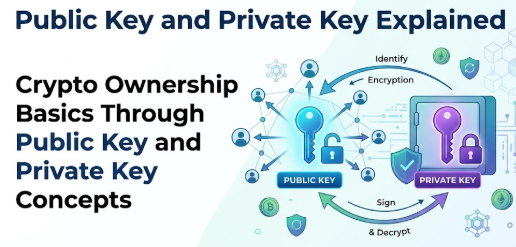
A public key is like a digital receiving identity that helps others send crypto to you or verify that a transaction belongs to your wallet. A private key is like the secret proof of ownership that allows you to access and move your crypto. In simple words, the public key can be shared in certain forms, but the private key must never be shared.
Public and private keys work together through cryptography. The private key creates digital signatures, and the public key helps others verify those signatures. Therefore, the blockchain does not need your name, password, or physical identity to confirm ownership. It checks whether the correct private key has signed the transaction.
People search for Public Key and Private Key Explained because crypto wallets, exchanges, seed phrases, and blockchain transactions can feel confusing at first. Beginners often see terms like wallet address, recovery phrase, cold wallet, hot wallet, and custody without knowing how they connect.
In real life, these keys are used when someone receives Bitcoin, Ethereum, stablecoins, NFTs, or other blockchain-based assets. For example, if Rohan wants to receive crypto, he can share his wallet address. However, if he wants to send crypto, his wallet must use the private key to approve the transaction.
A common misunderstanding is that a wallet “stores coins.” In reality, a wallet stores or manages keys. The crypto itself remains recorded on the blockchain. The practical takeaway is simple: your wallet access depends on your private key or seed phrase, so protecting it matters more than protecting the app icon on your phone.
Why Public Key and Private Key Explained Is Important
Understanding public and private keys affects real financial decisions because crypto ownership depends on access control. Unlike normal banking, where a forgotten password may be reset after identity verification, a lost private key can mean permanent loss of funds. Therefore, wallet safety should come before trading, investing, or transferring crypto.
For savings, private key safety matters because some people use crypto wallets for long-term holding. For borrowing or DeFi activity, wallet permissions matter because one wrong approval can expose funds to risky smart contracts. For investing and trading, keys matter because assets may move through exchanges, wallets, and decentralized platforms. For tax planning, transaction history linked to wallet activity may be important for proper record keeping. For crypto decisions, private key management directly affects ownership, security, and risk control.
This topic also helps emotional decision-making. Many beginners rush into crypto because of social media excitement, but they do not first learn wallet basics. As a result, they may click fake wallet links, share seed phrases, or send funds to wrong addresses. A better approach is to learn the foundation before moving money.
For example, a beginner who receives a “support message” asking for a seed phrase may think it is normal account verification. However, after understanding private keys, the beginner knows that no legitimate wallet support should need the seed phrase. This awareness can prevent serious loss.
The Real Problem Readers Face With Public and Private Keys
The real problem is not only technical confusion. The bigger issue is that beginners enter crypto through apps, videos, social media tips, and quick investment stories without understanding the responsibility of self-custody. This creates a risky gap between excitement and knowledge.
Many beginners face too much confusing advice online. Some people say “not your keys, not your coins,” while others say exchanges are easier. Both views need context. Self-custody gives more control, but it also creates more responsibility. Exchange custody may feel simple, but it includes platform risk. Therefore, beginners need balanced understanding instead of one-sided advice.
Another problem is emotional decision-making. When prices move quickly, people may transfer funds in panic or greed. In that hurry, they may copy the wrong address, ignore network fees, approve unsafe wallet permissions, or store seed phrases carelessly.
Poor planning is also common. Beginners may not create backups, may save private information in screenshots, or may keep all funds in one wallet. Weak comparison between wallet types also causes mistakes. A mobile hot wallet may be convenient, but it may not be ideal for storing large long-term holdings.
The better approach is to slow down. Before using crypto, beginners should understand wallet custody, private key safety, transaction verification, scam patterns, and recovery methods. A practical learning-first mindset is safer than acting only on social media advice.
How Public Key and Private Key Works Step by Step
Step 1: A Private Key Is Created
A private key is generated first by a wallet system. It is a long secret value that should remain hidden. It matters because this key controls access to the crypto linked to that wallet. Beginners usually do not manually type the private key; wallet apps manage it behind the scenes.
To apply this safely, use a trusted wallet source and write down the recovery phrase carefully if the wallet provides one. For example, when a beginner creates a non-custodial wallet, the wallet may show a seed phrase that can restore the private keys.
A common mistake is taking a screenshot of the recovery phrase. A better approach is writing it offline and storing it securely.
Step 2: A Public Key Is Derived From the Private Key
The public key is mathematically connected to the private key, but the private key cannot practically be discovered from the public key. This matters because it allows open verification without exposing ownership secrets.
Beginners can think of the public key as a safe verification tool. For example, blockchain networks can confirm that a transaction was signed by the right private key without seeing that private key.
A common mistake is thinking the public key is the same as the private key. A better approach is to remember that public information helps receive or verify, while private information controls access.
Step 3: A Wallet Address Is Created
A wallet address is usually created from the public key through additional formatting. This address is what users commonly share to receive crypto. It matters because it is the practical receiving detail used in transactions.
To apply this safely, always copy the full address from your wallet and verify the first and last characters before sharing or sending funds. For example, an Ethereum address and a Bitcoin address are not interchangeable.
A common mistake is sending assets to the wrong network or address type. A better approach is checking the blockchain network before every transfer.
Step 4: Someone Sends Crypto to Your Address
When someone sends crypto, the transaction is broadcast to the blockchain network. The blockchain records that value is now linked to your wallet address. This matters because ownership is reflected on-chain, not inside a physical wallet.
To apply this safely, start with a small test transaction when using a new address or network. For example, before sending a larger amount, a beginner may send a small amount to confirm everything works.
A common mistake is rushing a large transfer without testing. A better approach is using test transfers, especially when learning.
Step 5: You Sign a Transaction With the Private Key
When you want to send crypto, your wallet uses the private key to create a digital signature. This signature proves that you have authority to move the funds. It matters because blockchain networks rely on this cryptographic proof.
To apply this safely, read transaction details before approval. Check the asset, amount, recipient address, network, and fees. For example, if your wallet shows an unfamiliar contract approval, do not approve it blindly.
A common mistake is clicking “confirm” quickly. A better approach is treating every wallet approval like a financial decision.
Step 6: The Network Verifies the Signature
Blockchain nodes verify whether the signature matches the public key and wallet address. This matters because it prevents unauthorized spending without requiring a bank or central authority.
Beginners do not need to understand advanced cryptography, but they should understand the basic trust model. The network checks math, not personal promises.
A common mistake is believing that customer support can reverse a wrong crypto transaction. A better approach is checking carefully before sending because many blockchain transactions cannot be reversed.
Step 7: The Transaction Becomes Part of the Blockchain Record
After network confirmation, the transaction becomes part of the blockchain history. This matters because the transaction record is usually transparent and traceable on public blockchains.
To apply this safely, keep records of important transactions for personal tracking, tax awareness, and portfolio review. For example, note the date, asset, amount, purpose, and wallet used.
A common mistake is ignoring transaction records. A better approach is maintaining a simple crypto activity journal.
Step 8: You Protect Access for Future Use
After receiving or sending crypto, your main responsibility is protecting access. This includes securing the private key, seed phrase, device, wallet app, and backup method.
To apply this safely, use strong device security, avoid suspicious links, keep backups offline, and never share seed phrases. For example, if someone asks for your seed phrase to “verify your wallet,” treat it as a scam warning.
A common mistake is focusing only on price movement and ignoring wallet security. A better approach is making security a routine habit.
Key Factors That Influence Public and Private Key Safety
Volatility
Crypto prices can move quickly. This matters because emotional price movement may push beginners into rushed wallet actions. A safer approach is to separate market decisions from security decisions. Never move funds in panic without checking addresses, networks, and fees.
Wallet Safety
Wallet safety is the foundation of crypto ownership. A wallet may be custodial, where a platform controls access, or non-custodial, where the user controls the private key. The mistake is choosing a wallet only because it looks simple. The better approach is understanding control, recovery, risk, and responsibility.
Exchange Reliability
Exchanges can make buying and selling easier, but keeping assets on an exchange creates platform risk. Beginners should not assume that an exchange account is the same as personal wallet ownership. A better approach is learning the difference between exchange custody and self-custody.
Transaction Fees
Blockchain transfers often include network fees. Fees can vary by network activity and blockchain type. The mistake is ignoring fees before sending. The better approach is checking fee details before confirming a transfer.
Scam Awareness
Fake wallet support, phishing websites, fake airdrops, and fake investment schemes often target beginners. Scammers usually try to get private keys, seed phrases, or wallet approvals. A better approach is verifying every platform and never sharing secret wallet information.
Private Key Safety
The private key is the most sensitive part of wallet control. If someone gets it, they may control the assets. The mistake is storing it online carelessly. The better approach is using secure offline backups and limiting exposure.
Platform Risk
A wallet app, exchange, bridge, or DeFi platform can create risk. Bugs, hacks, poor security, or fake versions can cause loss. A better approach is using only trusted tools, avoiding unknown links, and starting small.
Long-Term Risk Understanding
Crypto should not be treated as guaranteed income. Even with strong wallet safety, market risk still exists. The better approach is combining security awareness with financial planning, risk limits, and long-term discipline.
Detailed Breakdown of Public Key and Private Key Explained
Crypto Meaning
Crypto is a digital asset system that uses cryptography and blockchain networks to record ownership and transactions. It can include coins, tokens, stablecoins, and blockchain-based applications. However, crypto is also risky because prices can change quickly, platforms may fail, and users may lose access if they mishandle keys.
Blockchain Basics
A blockchain is a shared digital record maintained by a network. Instead of one central company controlling every entry, many participants help verify transactions. Public and private keys support this system because they allow users to prove ownership without revealing secret information.
Wallet and Exchange Basics
A crypto wallet helps users manage keys and interact with blockchain networks. A crypto exchange helps users buy, sell, and sometimes store crypto. The important difference is custody. In a non-custodial wallet, you control the private key or seed phrase. On many exchanges, the platform controls the wallet infrastructure.
The mistake is assuming every wallet or exchange gives the same level of control. The better approach is reading how custody works before depositing funds.
Transactions
A crypto transaction is a signed instruction to move value from one address to another. The private key signs the instruction, and the network verifies it through the public key. Once confirmed, the transaction is recorded on the blockchain.
Beginners should always check the recipient address, network, asset type, and fees before confirming. A wrong transaction may not be recoverable.
Network Fees
Network fees pay for transaction processing. Different blockchains have different fee systems. A beginner may think the fee is a hidden platform charge, but often it is a blockchain network cost. The better approach is checking the estimated fee before sending and avoiding unnecessary transfers.
Volatility
Wallet safety protects access, but it does not protect against price movement. A user can manage private keys perfectly and still face financial loss if crypto prices fall. Therefore, beginners should never confuse security with guaranteed profit.
Security Risks
The biggest security risks include phishing, malware, fake wallet apps, fake browser extensions, clipboard hijacking, and social engineering. A beginner may lose assets by approving a malicious transaction even without directly sharing a private key. The better approach is checking every approval and avoiding unknown links.
Scam Awareness
Crypto scams often use urgency. Messages like “verify now,” “claim reward,” “wallet locked,” or “guaranteed profit” should raise suspicion. Real wallet security never requires sharing a seed phrase with another person.
Private Keys and Seed Phrase Safety
A seed phrase is a set of words that can restore wallet access. It is usually easier for humans to back up than a raw private key. However, it is equally sensitive. Anyone with the seed phrase may restore the wallet and move funds.
The better approach is keeping the seed phrase offline, private, and protected from fire, theft, device hacks, and accidental loss.
Exchange Risk
Exchanges can be convenient, especially for beginners. However, using an exchange means trusting the platform’s systems, policies, and security. The better approach is not blindly choosing convenience over understanding. Beginners should learn both exchange use and wallet self-custody before deciding where to hold assets.
Beginner Safety Habits
A safe beginner should use small test transfers, write down recovery phrases offline, avoid public Wi-Fi for wallet activity, verify official apps, enable account security, and maintain transaction records. These habits do not remove all risk, but they reduce careless mistakes.
Why Crypto Should Not Be Treated as Guaranteed Income
Crypto can be educational and innovative, but it is not risk-free. Prices can fall, projects can fail, exchanges can restrict activity, and scams can appear professional. Therefore, beginners should treat crypto as a high-risk financial area and avoid using emergency money, borrowed money, or essential savings for risky activity.
Common Mistakes Beginners Make With Public and Private Keys
Following Random Advice
This happens because beginners often trust social media posts, influencers, or online comments. It is risky because not all advice is accurate, ethical, or suitable for your situation. What can go wrong is losing access, sending funds incorrectly, or using unsafe platforms. Instead, learn basic wallet safety before acting.
Ignoring Risk
Beginners may focus only on profit stories. This is risky because crypto involves market risk, cybersecurity risk, and platform risk. What can go wrong is permanent loss of assets or poor financial decisions. Instead, review both security and financial risk before using crypto.
Not Comparing Wallet Options
Some users choose the first wallet they see. This is risky because wallets differ in custody, recovery, device support, and security features. Instead, compare hot wallets, hardware wallets, custodial accounts, and recovery methods.
Trusting Fake Profit Claims
Scammers often promise high returns to gain trust. This is risky because fake schemes may ask users to deposit funds or reveal wallet access. Instead, avoid guaranteed-return language and verify claims carefully.
Making Emotional Decisions
Fear and greed can cause rushed transactions. This is risky because blockchain mistakes are hard to reverse. Instead, slow down, verify details, and use a written checklist.
Sharing Sensitive Information
Sharing a seed phrase, private key, or wallet backup can give someone full control. This is one of the most dangerous mistakes. Instead, treat wallet secrets like the master key to your financial vault.
Ignoring Tax, Legal, or Compliance Responsibilities
Some beginners assume crypto activity has no reporting responsibility. This may create future problems depending on local rules. Instead, keep records and consult a qualified professional where needed.
Depending Only on Social Media Advice
Social media can be useful for awareness, but it should not replace personal research. Instead, use it as a starting point, not a final decision source.
Don’t Do This Checklist
- Do not share your private key or seed phrase.
- Do not save seed phrases in screenshots or cloud notes.
- Do not click wallet links from unknown messages.
- Do not approve transactions you do not understand.
- Do not send crypto without checking the network.
- Do not use emergency money for risky crypto activity.
- Do not trust guaranteed profit claims.
- Do not ignore tax or record-keeping responsibilities.
- Do not keep all assets in one risky place.
- Do not act in panic, greed, or pressure.
Practical Real-Life Examples of Public and Private Keys
Example 1: Crypto Beginner Avoiding Fake Wallet Support
Situation: A beginner receives a message saying their wallet needs verification.
Mistake or challenge: The message asks for the seed phrase.
Better action: The beginner refuses and closes the message.
Learning: No genuine wallet support should ask for a private key or seed phrase.
Example 2: Salaried Person Protecting Long-Term Savings
Situation: A salaried employee buys a small amount of crypto for learning.
Mistake or challenge: They initially plan to keep the seed phrase in a phone screenshot.
Better action: They write it offline and store it securely.
Learning: Convenience should not come before wallet safety.
Example 3: Beginner Investor Testing a Transfer First
Situation: A new investor wants to move crypto from an exchange to a wallet.
Mistake or challenge: They are unsure about the correct network.
Better action: They send a small test transfer first.
Learning: Test transactions can reduce costly transfer mistakes.
Example 4: Small Business Owner Tracking Crypto Records
Situation: A small business owner receives a blockchain payment.
Mistake or challenge: They do not record the transaction details.
Better action: They note the date, amount, asset, wallet, and purpose.
Learning: Proper records help with accounting, tax review, and transparency.
Example 5: Finance Blogger Explaining Crypto Safely
Situation: A finance blogger writes about wallet safety for readers.
Mistake or challenge: The first draft says crypto wallets “store coins.”
Better action: The blogger explains that wallets manage keys and blockchain access.
Learning: Accurate language builds trust and prevents beginner confusion.
Two Useful Tables for Better Understanding
Table 1: Public Key, Private Key, Wallet Address, and Seed Phrase
| Item | Simple Meaning | Can You Share It? | Main Use |
|---|---|---|---|
| Public Key | A cryptographic identity used for verification | Sometimes, depending on context | Helps verify signed transactions |
| Wallet Address | A shorter receiving address derived from public key information | Yes, for receiving funds | Used to receive crypto |
| Private Key | Secret ownership key that controls wallet access | No | Used to sign and approve transactions |
| Seed Phrase | Human-readable backup that can restore private keys | No | Used for wallet recovery |
Table 2: Beginner Mistake vs Safer Approach
| Beginner Mistake | Why It Is Risky | Safer Approach |
|---|---|---|
| Sharing seed phrase with support | It can give full wallet control to scammers | Never share wallet secrets |
| Sending without checking network | Funds may go to the wrong chain or address | Verify asset, address, and network |
| Saving backup in cloud storage | Online accounts can be hacked | Store backups offline securely |
| Approving unknown contracts | Malicious approvals may expose assets | Read and verify every approval |
| Keeping all funds in one wallet | One mistake can affect everything | Use risk-based wallet separation |
Tools, Methods, and Frameworks Readers Can Use
Wallet Safety Checklist
A wallet safety checklist is a simple list used before creating, restoring, or using a crypto wallet. It helps beginners confirm that the wallet source is genuine, the recovery phrase is stored offline, and the device is secure. It prevents careless setup mistakes.
Exchange Comparison Checklist
This method helps users compare exchange custody, account security, withdrawal rules, fees, supported networks, and customer support. It helps beginners avoid choosing a platform only because someone recommended it online.
Transaction Verification Habit
This means checking the recipient address, asset, network, amount, and fee before every transfer. It helps avoid wrong-address and wrong-network mistakes. Beginners should especially use this habit when sending funds to a new wallet.
Scam Warning Checklist
This checklist helps users identify red flags such as guaranteed returns, urgent wallet verification, seed phrase requests, unknown links, fake airdrops, and pressure-based messages. It helps avoid fraud and emotional decisions.
Private Key Safety Method
This method focuses on keeping private keys and seed phrases offline, private, backed up, and protected from theft or loss. Beginners can use physical written backups, secure storage, and limited exposure.
Crypto Activity Journal
A crypto activity journal records transfers, purchases, wallet changes, transaction purposes, and important notes. It helps with review, tax awareness, and learning from mistakes. It also reduces confusion when multiple wallets are used.
Risk Allocation Method
This method means deciding how much risk you can afford before buying or moving crypto. It helps beginners avoid using emergency funds, borrowed money, or essential savings for risky digital assets.
Expert Tips to Make Better Decisions
1. Learn Wallet Basics Before Buying Crypto
This matters because ownership in crypto depends on keys, not only account passwords. Beginners can apply this by understanding public keys, private keys, wallet addresses, and seed phrases before making transfers.
2. Never Share Your Seed Phrase
This matters because the seed phrase can restore wallet access. Beginners should apply this by refusing any request for recovery words, even if the message looks professional.
3. Start With Small Test Transactions
This matters because wrong transfers can be difficult or impossible to reverse. Beginners can apply this by sending a small amount first when using a new wallet or network.
4. Check the Network Every Time
This matters because many assets exist on multiple networks. Beginners can apply this by matching the sending network and receiving network before confirming.
5. Keep Emergency Money Separate
This matters because crypto is volatile and risky. Beginners can apply this by never using rent money, medical funds, loan repayment money, or essential savings for speculative activity.
6. Use Strong Device Security
This matters because wallet apps are only as safe as the device they run on. Beginners can apply this by using screen locks, software updates, secure passwords, and avoiding suspicious downloads.
7. Avoid Fake Profit Promises
This matters because scammers often use guaranteed-return language. Beginners can apply this by treating every “fixed income” or “double money” crypto offer as a serious warning sign.
8. Keep Written Records
This matters because transaction history may help with personal tracking, tax review, and portfolio clarity. Beginners can apply this by maintaining a simple record of wallet actions and transfers.
9. Do Not Blindly Copy Others
This matters because someone else’s risk level may not match yours. Beginners can apply this by creating their own risk limits and learning before following advice.
10. Review Wallet Permissions
This matters because some blockchain approvals may give platforms access to tokens. Beginners can apply this by checking approvals and avoiding unknown smart contracts.
11. Separate Learning Wallets From Storage Wallets
This matters because experimenting with DeFi, NFTs, or new tools can create extra risk. Beginners can apply this by using small learning wallets for testing and safer storage for long-term holdings.
12. Verify Official Sources Carefully
This matters because fake wallet apps and phishing websites can look real. Beginners can apply this by checking spelling, app publisher details, and avoiding links from random messages.
13. Stay Calm During Market Movement
This matters because panic can cause poor transfers and unsafe approvals. Beginners can apply this by using a checklist before moving funds during high-pressure moments.
14. Take Professional Advice When Needed
This matters because crypto may have tax, legal, and financial planning impact. Beginners can apply this by consulting qualified professionals for major decisions.
Case Studies: How Better Understanding Changes Decisions
Case Study 1: The New Crypto Learner
Profile: A college student learning about crypto wallets.
Situation: He creates a wallet and sees a recovery phrase for the first time.
Problem: He thinks the recovery phrase is just a normal password backup.
Wrong approach: He saves it in a screenshot and uploads it to cloud storage.
Better approach: After learning wallet safety, he deletes the screenshot, creates a fresh wallet, writes the phrase offline, and stores it securely.
Result or learning: He understands that a seed phrase is not a normal password. It is wallet ownership access.
Key takeaway: Beginners should treat seed phrases as highly sensitive financial information.
Case Study 2: The Salaried Investor
Profile: A salaried employee buying crypto for long-term learning.
Situation: She wants to transfer crypto from an exchange to a personal wallet.
Problem: She is confused between wallet address, public key, and private key.
Wrong approach: She almost shares sensitive wallet details in an online group for help.
Better approach: She learns that only the wallet address is used for receiving funds and private keys must remain secret. She sends a small test transfer first.
Result or learning: The transfer works safely, and she gains confidence without risking a large amount.
Key takeaway: Small test transactions and basic key knowledge reduce beginner mistakes.
Case Study 3: The Small Business Owner
Profile: A small business owner accepting a digital asset payment.
Situation: A client sends payment to the owner’s wallet address.
Problem: The owner does not know how to maintain transaction records.
Wrong approach: He only checks the wallet balance and ignores documentation.
Better approach: He records the transaction hash, date, asset, amount, purpose, and wallet used. He also consults a qualified professional for tax treatment.
Result or learning: His records become easier to review later.
Key takeaway: Crypto security and financial record keeping should work together.
Risk Awareness: What Readers Must Check First
Cybersecurity Risk
Cybersecurity risk means the possibility of losing access or assets because of hacks, phishing, malware, or unsafe devices. It matters because crypto transactions can be irreversible. Beginners can reduce this risk by using secure devices, avoiding unknown links, and protecting seed phrases offline.
Platform Risk
Platform risk means the exchange, wallet app, bridge, or DeFi platform may fail, get hacked, restrict access, or behave poorly. It matters because convenience does not remove risk. Beginners can reduce this risk by comparing platforms, avoiding unknown tools, and not keeping everything in one place.
Volatility Risk
Volatility risk means crypto prices can move sharply. It matters because beginners may make emotional decisions during price swings. They can reduce this risk by using only money they can afford to risk and avoiding panic-based trading.
Fraud Risk
Fraud risk includes fake investment plans, fake support agents, fake airdrops, and phishing links. It matters because scammers often target people who do not understand private keys. Beginners can reduce this risk by rejecting seed phrase requests and avoiding guaranteed-return claims.
Data Privacy Risk
Data privacy risk means exposing personal or wallet-related information unnecessarily. It matters because public blockchain activity can sometimes be analyzed. Beginners can reduce this risk by sharing only necessary receiving details and avoiding public oversharing.
Misinformation Risk
Misinformation risk means making decisions based on incomplete or wrong advice. It matters because crypto content online can be biased or promotional. Beginners can reduce this risk by learning fundamentals and verifying information before acting.
Tax and Compliance Risk
Tax and compliance risk means ignoring legal reporting, documentation, or local rules. It matters because crypto activity may create obligations depending on the country and situation. Beginners can reduce this risk by keeping records and consulting qualified professionals.
Emotional Risk
Emotional risk means acting because of fear, greed, urgency, or pressure. It matters because rushed transactions can create irreversible mistakes. Beginners can reduce this risk by using a checklist and waiting before confirming important actions.
Checklist Before Taking Action
- I understand the difference between public key, private key, wallet address, and seed phrase.
- I have reviewed the risks before buying, sending, or storing crypto.
- I have compared wallet or exchange options properly.
- I have checked transaction fees and network details.
- I have verified the recipient address carefully.
- I have avoided fake profit or guaranteed-return claims.
- I have kept emergency funds separate from crypto activity.
- I have protected my personal data and wallet secrets.
- I have not shared my private key or seed phrase with anyone.
- I have reviewed tax, legal, or compliance impact where required.
- I have prepared a written record of important transactions.
- I have avoided emotional decisions based on panic or greed.
- I have considered professional advice for major financial decisions.
Use this checklist before every important crypto action. It is especially helpful when you are creating a new wallet, moving funds, approving transactions, or responding to messages that ask for wallet information. A checklist may feel slow, but it can prevent costly mistakes.
Strategic Insights for Better Decision-Making
Wallet Custody
Wallet custody means who controls the private key. If you control it, you have more ownership responsibility. If a platform controls it, you depend on that platform. Beginners should understand custody before deciding where to store assets.
Exchange Risk
Exchanges are useful for buying and selling, but they are not the same as personal wallets. The practical approach is to understand withdrawal rules, account security, and platform reliability before holding funds there.
Transaction Confirmation
A transaction confirmation means the network has accepted and recorded the transfer. Beginners should not assume a transfer is complete only because they clicked send. They should wait for confirmation and check transaction details when needed.
Scam Patterns
Many scams follow repeated patterns: urgency, fake authority, reward offers, wallet verification, and seed phrase requests. Beginners should learn these patterns so they can identify danger before clicking.
Private Key Management
Private key management means safely creating, storing, backing up, and protecting access. A strong approach includes offline backup, privacy, secure storage, and limited exposure. The mistake is treating wallet secrets like normal login details.
Network Fee Awareness
Network fees can affect transfer decisions. Beginners should understand that some fees come from blockchain activity, not only from platforms. A better approach is reviewing fees before sending and avoiding unnecessary transactions.
Risk Separation
Risk separation means not placing every asset, wallet, or activity in one place. Beginners may use one wallet for learning and another for safer storage. This reduces the impact of one mistake.
Long-Term Discipline
Crypto decisions should not depend only on daily excitement. Long-term discipline means learning slowly, reviewing risks, keeping records, and avoiding emotional transfers. This mindset supports better financial awareness.
Key Terms Explained for Beginners
- Public Key: A public key helps verify wallet activity. It is connected to the private key but does not reveal the private key.
- Private Key: A private key is the secret digital key that controls access to crypto linked with a wallet.
- Wallet Address: A wallet address is the receiving detail you share when someone needs to send crypto to you.
- Seed Phrase: A seed phrase is a group of recovery words that can restore wallet access. It must stay private.
- Digital Signature: A digital signature proves that a transaction was approved by the correct private key.
- Blockchain: A blockchain is a shared digital record that stores transactions across a network.
- Crypto Wallet: A crypto wallet is a tool that helps users manage keys and interact with blockchain networks.
- Custodial Wallet: A custodial wallet means a platform controls key management for the user.
- Non-Custodial Wallet: A non-custodial wallet means the user controls the private key or seed phrase.
- Transaction Hash: A transaction hash is a unique reference for a blockchain transaction.
- Network Fee: A network fee is the cost paid to process a blockchain transaction.
- Phishing: Phishing is a scam method where attackers trick users into revealing sensitive information.
- Smart Contract Approval: A smart contract approval allows a blockchain application to interact with your tokens.
- Cold Wallet: A cold wallet keeps keys offline, which may reduce online attack exposure.
- Hot Wallet: A hot wallet is connected to the internet and is convenient but may carry higher security risk.
Who Should Read This Blog
Beginners
Beginners should read this blog because it explains crypto ownership in simple words before they make risky wallet decisions.
Students
Students learning blockchain or finance can use this guide to understand the practical role of cryptography in digital ownership.
Salaried Employees
Salaried employees exploring crypto can learn how to protect savings, avoid scams, and separate emergency funds from risky assets.
Small Business Owners
Small business owners accepting digital payments can understand wallet records, transaction safety, and basic custody responsibility.
New Investors
New investors can learn why crypto security is as important as price research.
Traders
Traders moving assets between exchanges and wallets can use this guide to reduce wrong-network and wrong-address mistakes.
Loan Seekers
Loan seekers should understand that borrowed money should not be used carelessly for risky crypto activity.
Crypto Learners
Crypto learners will benefit from clear explanations of public keys, private keys, wallets, transactions, and seed phrases.
Casino Content Creators
Casino content creators who write about crypto payments can use this knowledge to explain wallet safety responsibly.
Finance Bloggers
Finance bloggers can use this topic to create more accurate, trustworthy, and beginner-safe crypto content.
People Improving Money Awareness
Anyone improving financial awareness can learn how digital asset safety connects with planning, risk control, and discipline.
People Trying to Avoid Financial Mistakes
This blog helps readers avoid common errors like sharing seed phrases, trusting fake support, and acting under pressure.
Frequently Asked Questions
1. What is Public Key and Private Key Explained in simple words?
Public Key and Private Key Explained means understanding how crypto wallets prove ownership. A public key helps verify or receive activity, while a private key controls access. The private key must always stay secret.
2. Why is a private key important for beginners?
A private key is important because it allows crypto to be moved from a wallet. If someone else gets it, they may control the funds. Beginners should protect it like a master financial password.
3. Can I share my public key or wallet address?
A wallet address is commonly shared to receive crypto. However, private keys and seed phrases must never be shared. Beginners should still avoid oversharing wallet information publicly without a reason.
4. Is a wallet address the same as a private key?
No, a wallet address and a private key are different. A wallet address receives funds, while a private key controls access. Confusing the two can create serious safety problems.
5. What is the biggest mistake in Public Key and Private Key Explained?
The biggest mistake is sharing the private key or seed phrase. Once another person has it, they may access the wallet. This is why Public Key and Private Key Explained is essential for crypto safety.
6. What happens if I lose my private key?
If you lose your private key or seed phrase, you may lose access to your crypto permanently. Most blockchain networks do not have password reset systems like banks. Safe backup is very important.
7. Can customer support recover my private key?
In non-custodial wallets, customer support usually cannot recover your private key or seed phrase. This is why users must store recovery details safely. Anyone claiming they need your seed phrase is likely unsafe.
8. How can beginners start safely with crypto wallets?
Beginners should learn wallet basics, choose trusted tools, write recovery phrases offline, and start with small test transactions. They should avoid unknown links and never approve transactions blindly.
9. Why should I test a transaction first?
A test transaction helps confirm the address, network, and wallet setup before sending a larger amount. It may cost a small fee, but it can reduce the risk of a major mistake.
10. Does understanding keys guarantee crypto profits?
No, understanding keys improves security awareness but does not guarantee profit. Crypto still involves volatility, platform risk, fraud risk, and financial uncertainty. Beginners should make careful decisions.
11. Is Public Key and Private Key Explained useful for investors?
Yes, Public Key and Private Key Explained is useful for investors because safe storage affects asset protection. Investors should understand custody, wallet backups, exchange risk, and transaction verification.
12. What is the best next step after reading this guide?
The best next step is to review your wallet safety habits before moving any funds. Check where your assets are stored, how your seed phrase is protected, and whether you understand every transaction approval.
Conclusion and Next Steps
Public Key and Private Key Explained helps beginners understand the real meaning of crypto ownership, wallet access, and digital asset safety. A public key or wallet address can be used to receive crypto, but a private key or seed phrase must always stay private because it controls wallet access. Beginners should avoid sharing wallet secrets, clicking unknown links, saving recovery phrases online, or making rushed transactions. The safest next step is to learn the basics, secure your backup, verify every transaction, and start carefully with small amounts. Crypto can be useful, but it also carries risks, so responsible learning and strong security habits matter before taking action.